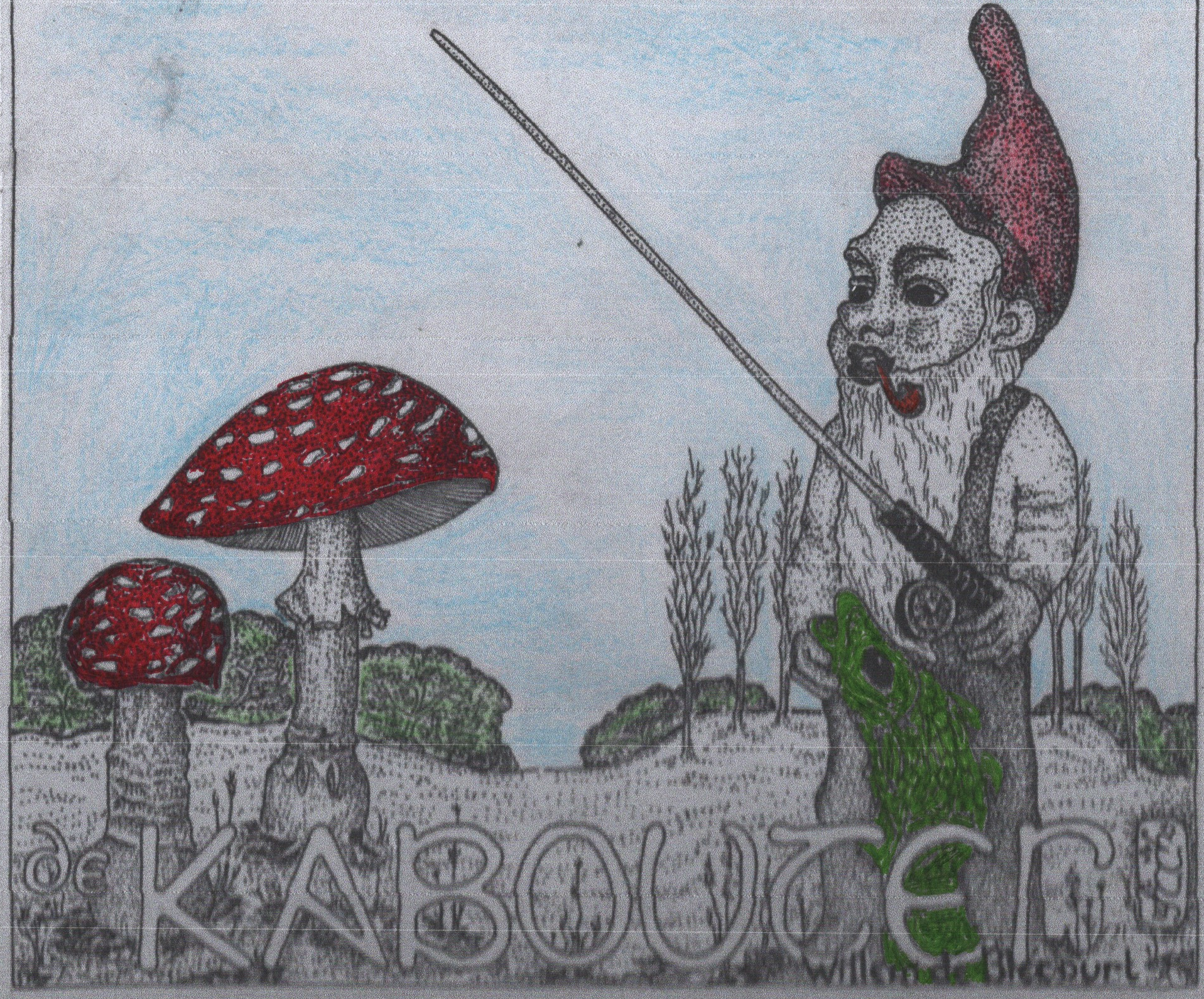
Gnomes (Dutch: kabouters) are small, The pages about them, too. It was the case in
Heaps (see Megaliths. Section 20); here, it was also the case. However, if you keep looking for dwarfs, you’ll find them; thus the pages gradually expand.
As I already wrote in 1977, gnomes may have been depicted as friendly, they were far from that. They were mischief demons, who could blind you. The article I wrote for the journal
Drab is fairly comprehensive; you can see it
here (although it is in Dutch).
In it I already made the connection between the Amanita Muscaria and the birth of gnomes out of the legs of Blaín (figuring in the Edda). At one day I may translate the entire little article in English.
A few months before leaving East Sussex, I happened to come across a place where the garden didn’t have one or two gnomes. It was crowded with gnomes. I had to return to take pictures.
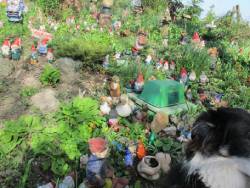
Of course, being Dutch and staying (a lot) in the early seventies in Amsterdam and Rotterdam, I experienced also the ideological site of gnomes.
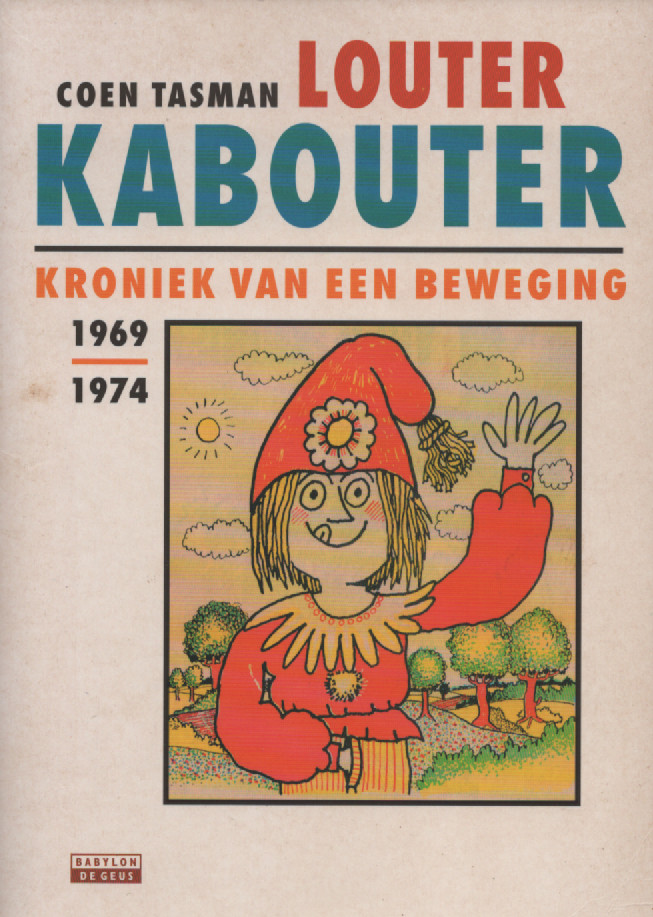
If I have time, I may want to write about it. Fot now, I refer to the excellent book of Coen:
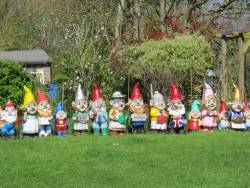
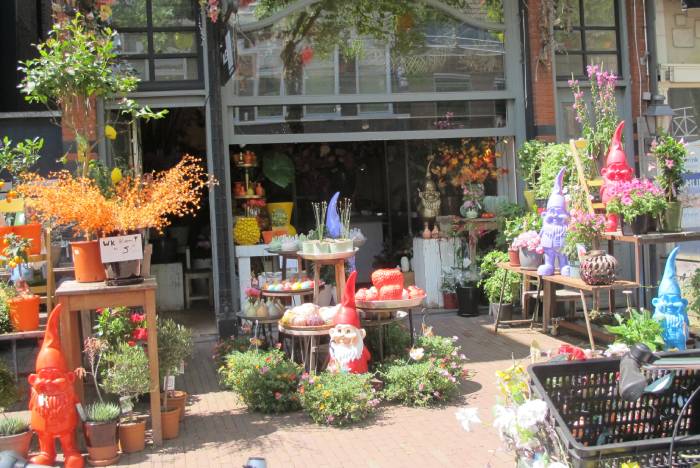
And the dwarfs I mentioned at the start, I found in front of a flowershop, located in my habitat. There were seven of them, thus they referred to Snow White, the well known fairy-tale...
In the Dutch book
Van Aladin tot Zwaan kleef aan by Ton Dekker, Jurjen van der Kooi & Theo Meder (Nijmegen: SUN, 1997), pp. 334-339, it is referred to as AT 709. Their defining text is nr. 53 of the KHM (
Kinder- und Hausmärchen) of the Grimm Brothers. They state at the start, that the tale is hardly known in Dutch oral tradition, but that its popularity is to thank of the book (and what followed, such as a theme park, films, etc. Among German adolescents it ranked as no. 1 of the fairy tales (for boys) and as no. 3 (for girls). The three authors point to an older version by Giambattista Basile, in his
Pentamerone, and they call it a “rather deviant version” (p. 336). Although I didn’t pay any specific attention to this tale in my
Tales of Magic, Tales in Print, for the attentive reader, it should be clear that I considered the tale as a simplification of Musäus’s Richilde and that it ended up in the KHM through the Hassenpflug sisters, especially Marie. By the beginning of the 18th century, Snow White was “easily obtainable in print” (p. 145). Further on, I mention that Musäus’s
Volksmärchen der Deutschen (1782) based stories on the Pentamerone. (p. 179). The attentive reader merely needs to connect the dots. Broadly speaking, I agree with my fellow-countrymen and I’m only a little bit more specific.
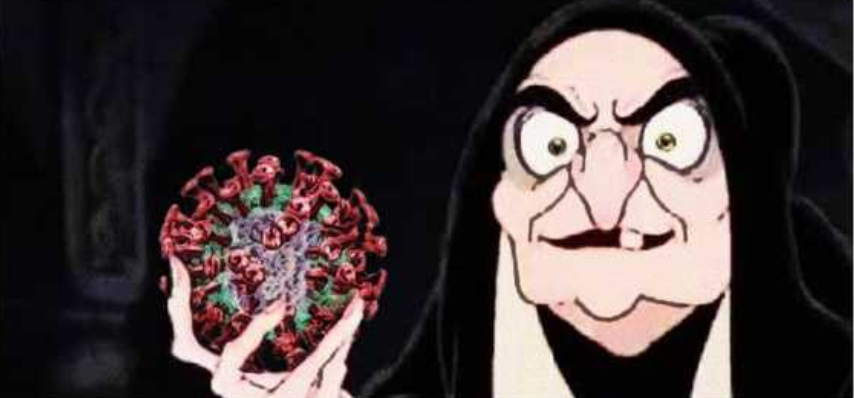
The stories in the Dutch Folktale Bank are generously illustrated, date mostly from after 1996 and contain several jokes. Examples of the last genre are: What do you get when Snowwhite takes off her clothes? Answer: 7 Up.1 Or they are about Corona.2
Or the contemporary legend, in which the front guarden of a man in Oosterhout (province of Noord-Brabant), has been plundered of all its guarden gnomes by the Kabouter Actie Front. Here too, the fairy-tale is joined with the political action. But in what sense is this a contemporary legend? Guardens full of gnomes are, apart from East Sussex, also present in the Netherlands (and not just in Oosterhout, given that gnomes are also sold elsewhere – see picture). The story appeared in a newspaper (and was obviously believed to be true). At the most, it is the combination of the guarden gnomes with the Action Front (read: Liberation Front), although in the context of Western Europe this is not surprising.3
The contours of a new research are starting to emerge.
 1 MOP40029. See also MOP10259, DIVER052, DVTEX402,
2 CORONA310 -SNEEUWWITJE 2020: instead of a poisonous apple, the witch offers Snow White the corona virus. See also: CORONA400, CORONA348, CORONA224, CORONA350
3 See also: STSAG883 (BRUN 10140).