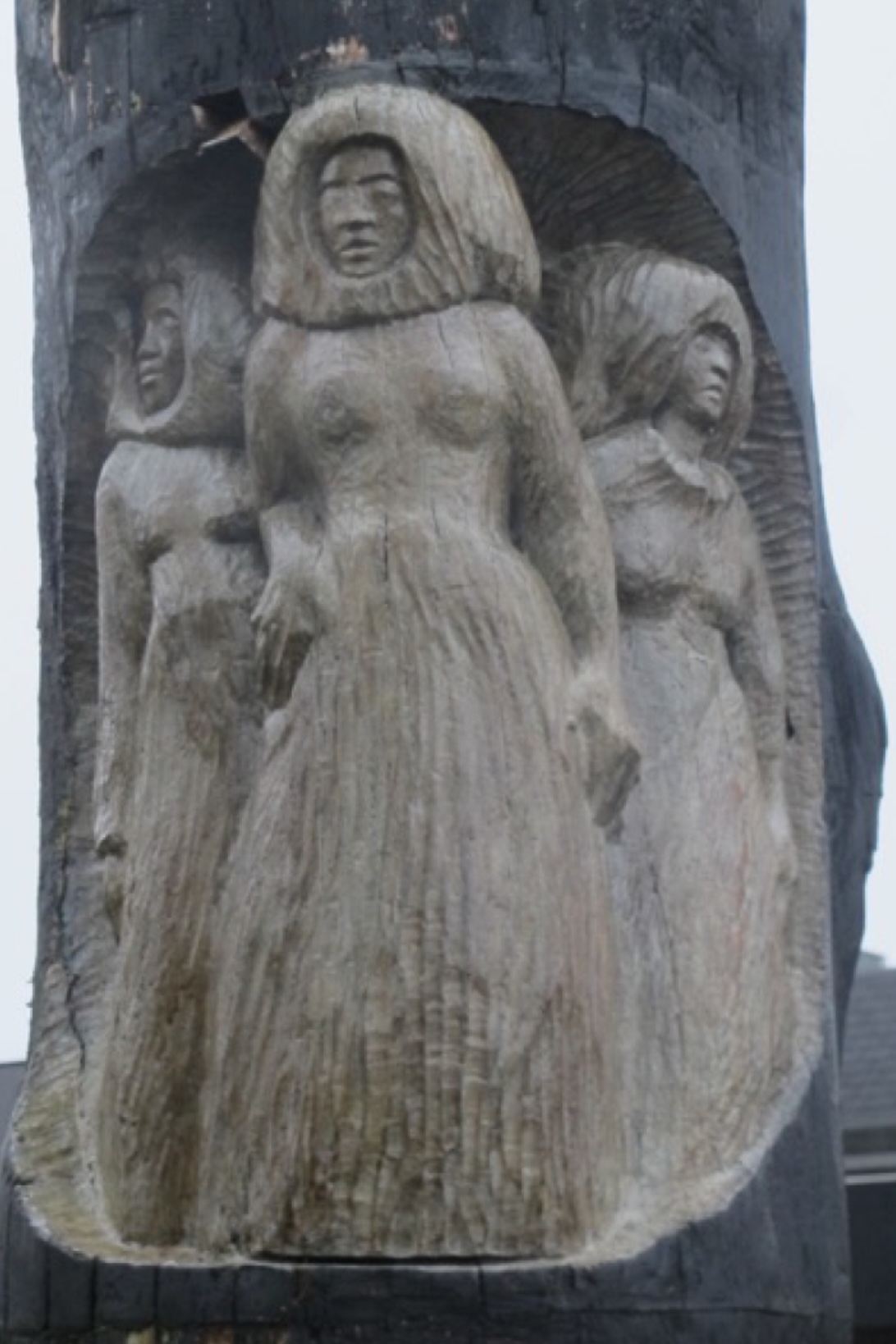
Norg
The designation “Witte Wieven” is untranslatable. The words are Dutch, but
even in the northern provinces of the Netherlands, the word does not have the
same meaning everywhere.
As more often, the seed of my interest in Witte Wieven was sown while
working on the volume Stad & Streek (2010)1, the Dutch equivalent of Lore of the Land (Westwood & Simpson 2005).
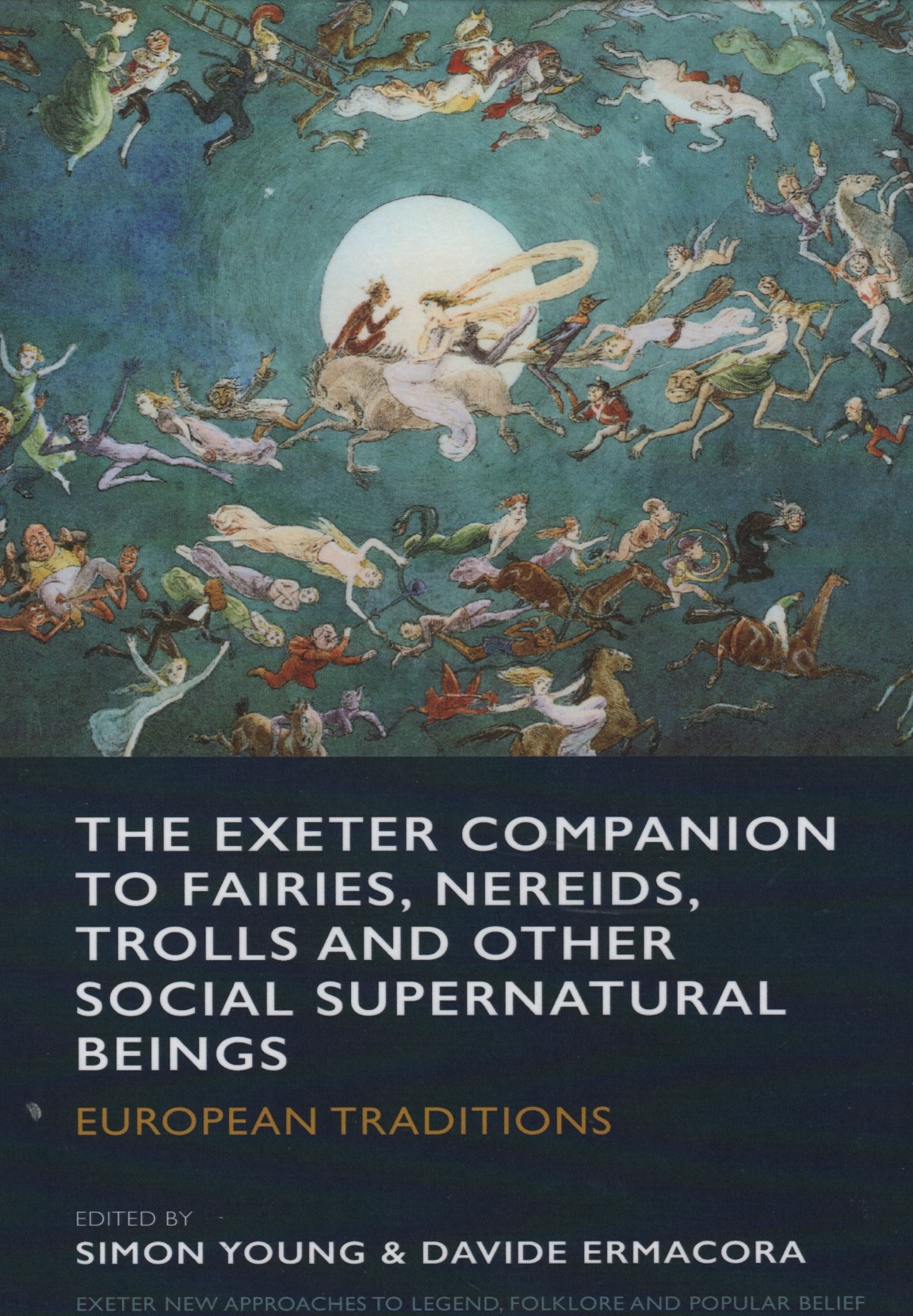
To Stad & Streek, I contributed the entries on Wapserveen, Lonneker, Ede,
and Hoog-Soeren (concerning Witte Wieven).2 These entries were later reworked into my chapter in Social Fairies.
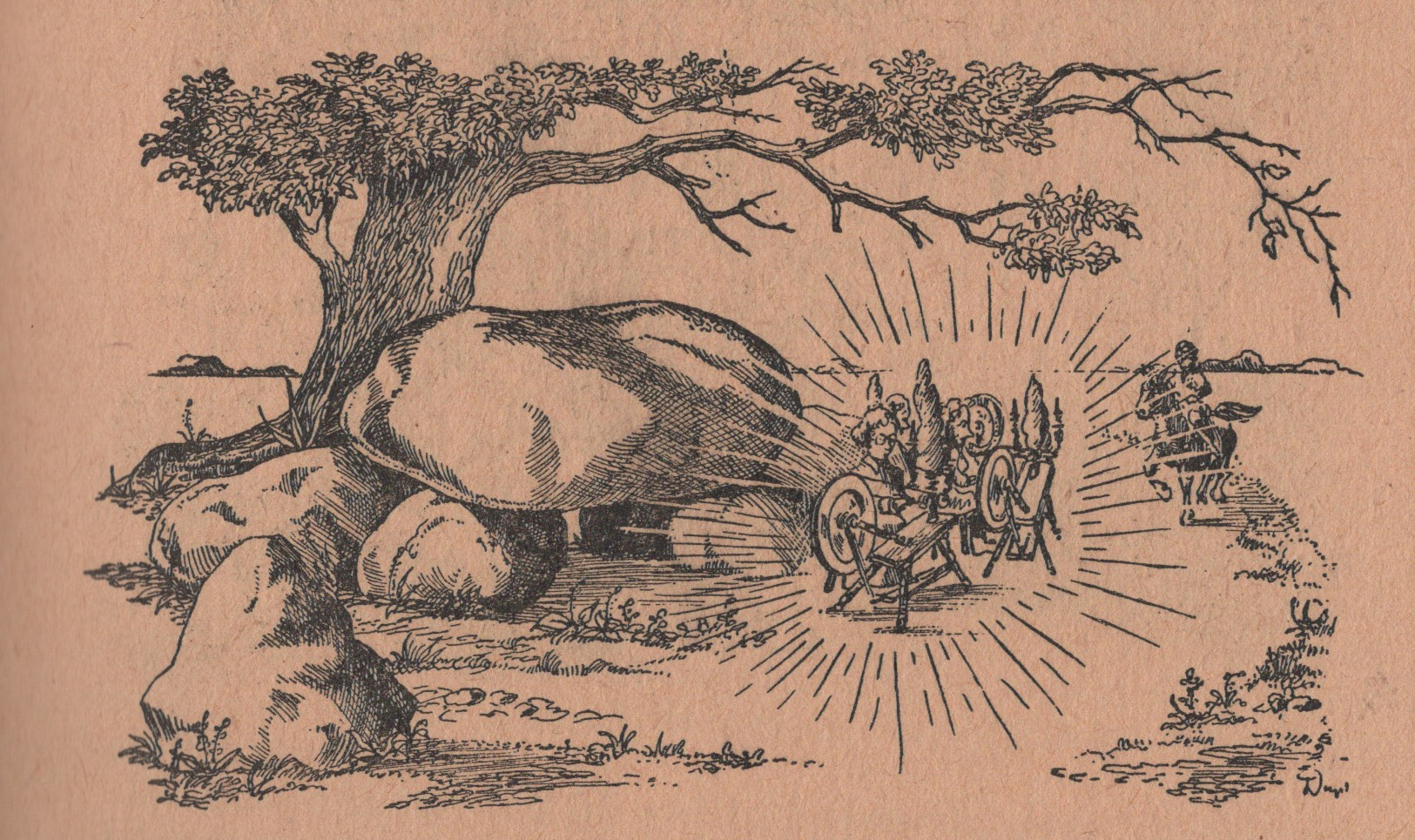
In “folk tales” of the eastern Netherlands the witte wijven (white women or wights) are often depicted as spinning women, guarding treasures or chasing
away and then pursuing an unfortunate boy who had disturbed one of their
meetings. These texts derive from a mixture of oral and written traditions;
they often reflect romantic notions and confuse issues of local identity and
touristical interests. They first appeared in the nineteenth century at the
earliest; the mention of older reports about the wijven (with a different
content) usually does not reach beyond the Forgotten and Lost Antiquities by
the Coevorden minister Johan Picardt (1660). He was one of the first
archealogists in the Netherlands but as a minister he was conservative in his
views should not be taken as a very reliable source for the customs of the
area he resided in.
It turns out that the work of the nineteenth-century “mythologist”, L.Ph.C.
van den Bergh, presents a more fruitful line of historical inquiry. Van den
Bergh, who later became the national archivist, in 1846 published his Sample
of a Critical Dictionary of Dutch Mythology, with the emphasis on “critical”. In his entry on the Witte Wijven, he referred to the work of Balthasar Bekker, a late seventeenth century Frisian Protestant minister with a deconstructive attitude; to Gijsbert Voet(ius) the mid-seventeenth-century Reformed
theologist, who rejected the new theories of René Descartes and Baruch
Spinoza; as well as to a passage in the writings of Johan Wier (a.k.a Weyer), a
sixteenth century medical doctor who was one of the first opponents of the
emerging witch trials. The brief descriptions by these rather dissimilar
authors of the Albas mulieres or Sibyllas albas not only indicate a fairly
widespread popular occurrence of the wijven, they also make it possible to
establish a link with fortune-telling (wikken), and to connect them with the
corpus of the supra-national, medieval arguments about the dominae
nocturnae. It can be concluded that a regional tradition in an under-
researched European region had not been subsumed by a more general
demonological discussion, but rather that research into the witte wijven
enables a more clearer view of this discussion. At the same time, it becomes
clear which parts of the nineteenth-century tales had an historical background
and which less so.
This abstract was written for my chapter in Social Fairies.
It serves as a kind of introduction to the Witte Wieven, although the “final” words on them will be different. In early November 2023, I gave a talk in Groningen ‘The Translation of the Witte Wieven’ which was a comment on (this then unpublished) chapter.
During my work on Heaps of Stones, I discovered that the Wieven may be extremely old (see: Megaliths). They (probably) already
existed in pre-historical times.
Today, there are sharp geographical distinctions: the Witte Wieven at Zwiep
(Gelderland), mean something different than they do just across the
(provincial) border. Located near Zwiep is a pit, named after the Witte
Wieven, the Witte Wieven kuil (or ‘koele’). There are more of these pits, but some of them may have been filled and therefore disappeared.
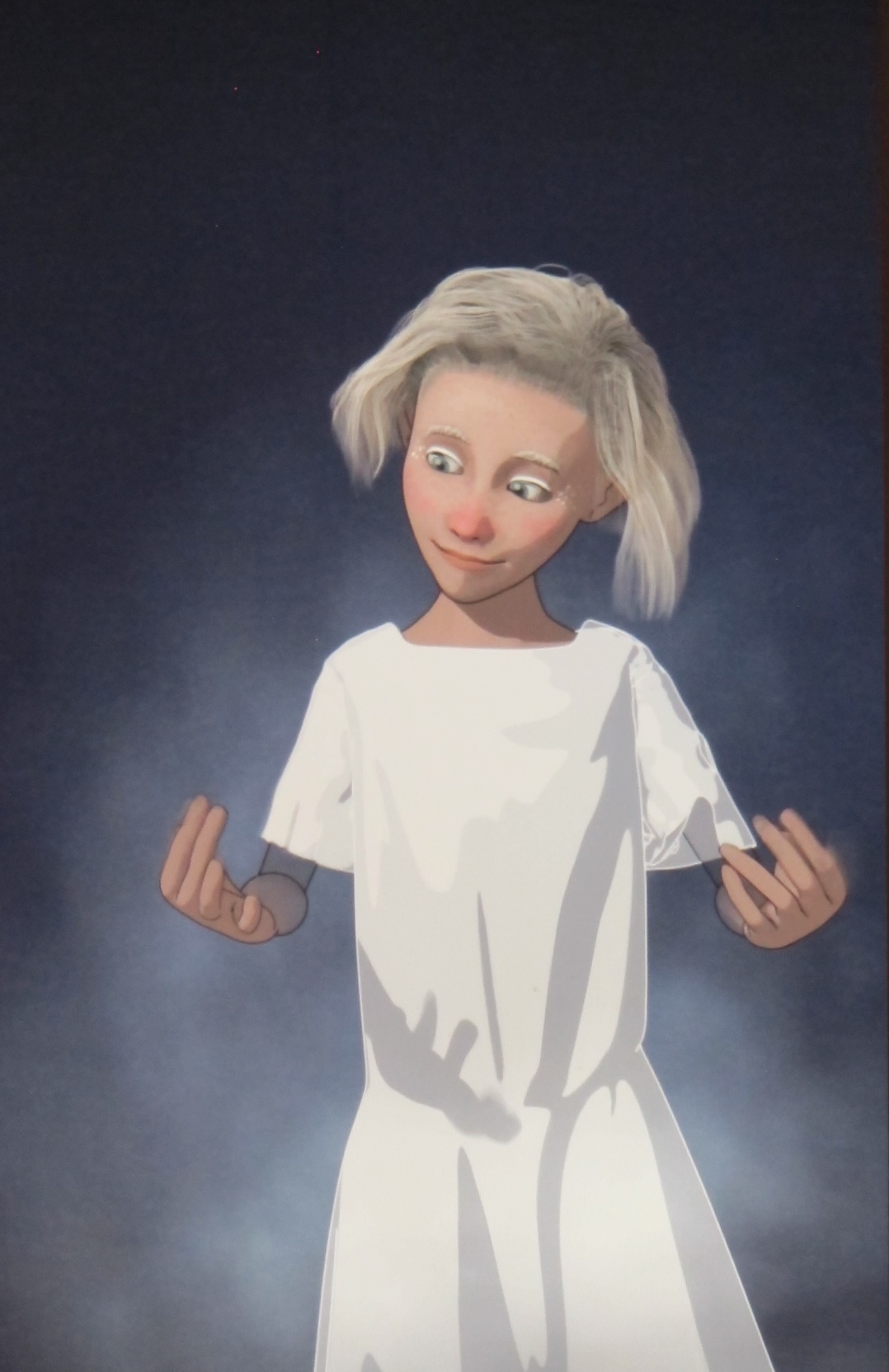
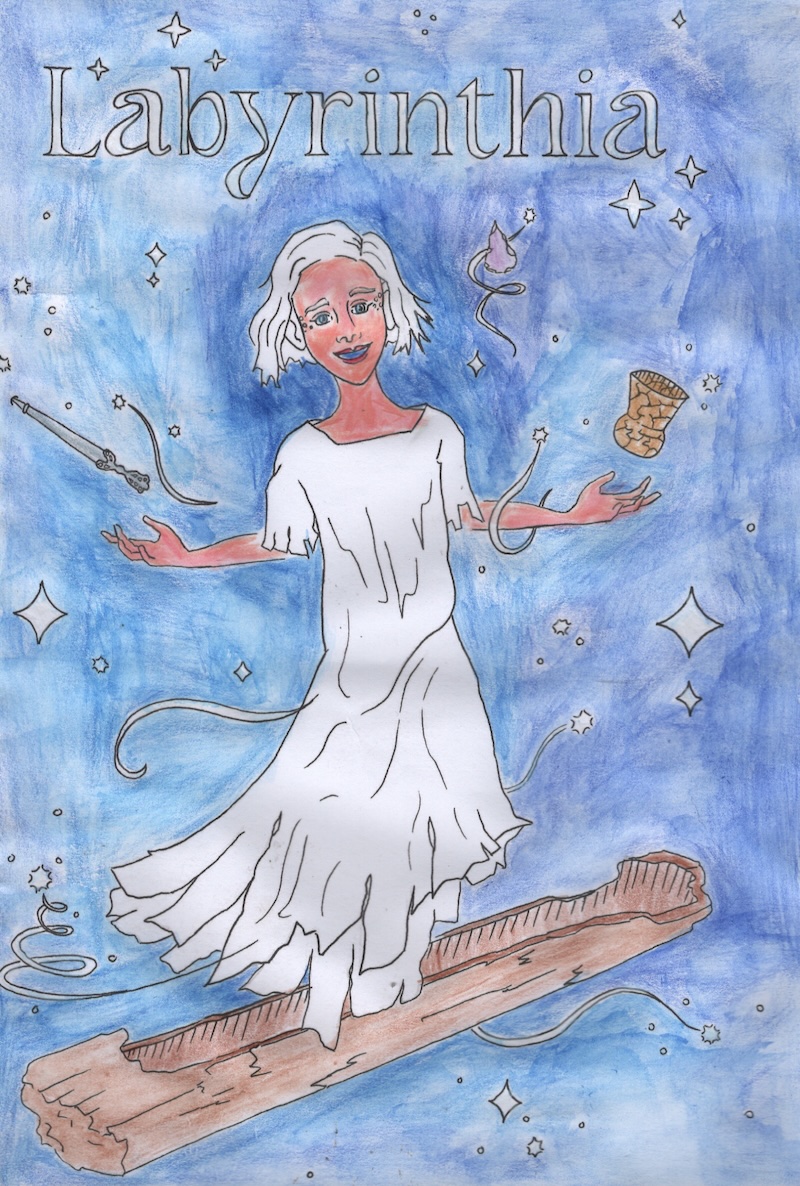
Also today, a “white girl” (wit meisje) is to be found at the Drents Museum (located in Assen), where she introduces exhibitions and explains that she can
float and has no legs; but that she is just a normal girl.
There is also a film (about an hour long): to be watched at:
https://npo.nl/start/afspelen/koolhoven-presenteert_3
And, on the ancienity of the Witte Wieven, see my chapter in Heaps of Stones
(as yet unpublished ELEMENT by CUP).
It is not so much the text in the section ‘Witte Wieven’ in this element, as the
context with points to the considerable age of the creatures.
Eventually, everything together will form a NEW BOOK (I hope).
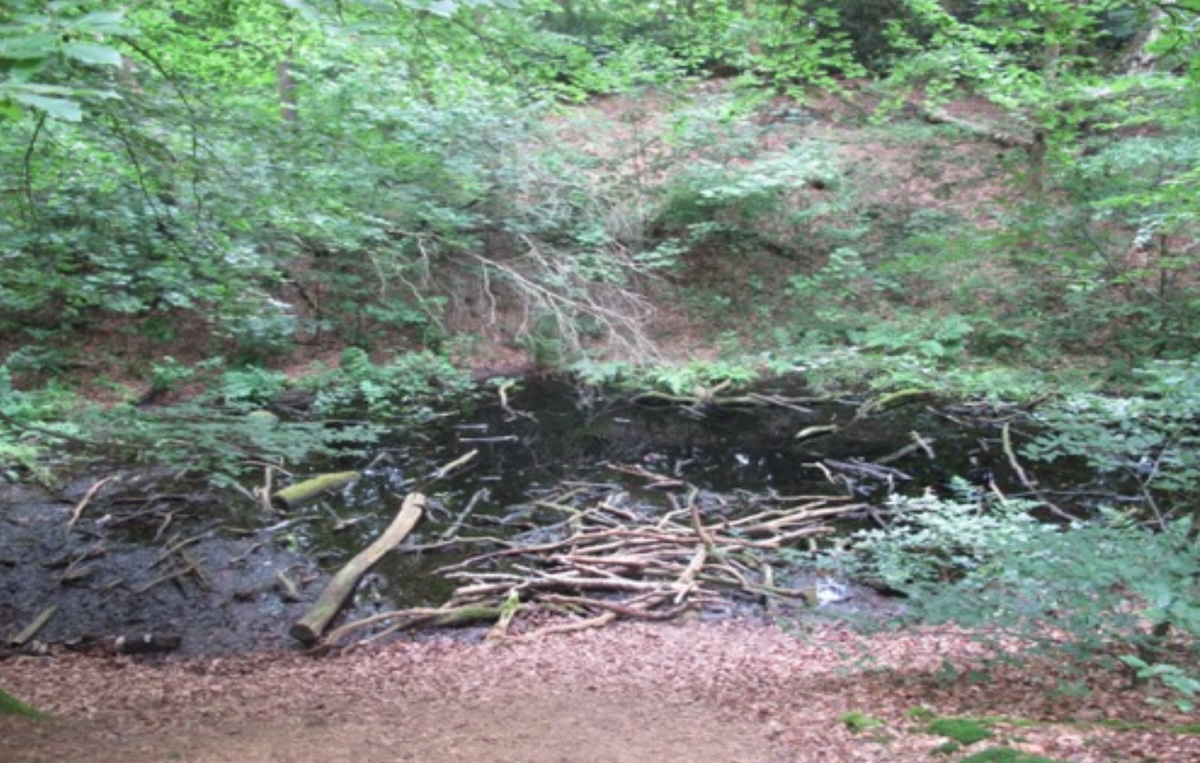
Witte Wieven kuil
Labyrinthia
Labyrinthia
In het Drents Museum verbeeldt Labyrinthia – een wit meisje, zwevend en
zonder benen – de hoge ouderdom van de witte wieven. Want zij is
afgebeeld met een stuk vuursteen, een gereconstrueerde trechterbeker,
alsmede een mes. Bovendien zweeft te boven een boomkano. In het museum
is zij de icoon van een permanente tentoonstelling.
1 De Blécourt, Koman, Van der Kooi, Meder
Verhalen van Stad en Streek (Amsterdam: Bert Bakker).
2 See also: Van der Kooi on Vorden and Meder on Zwiep.