The (rather biographical) story of me and my (now ex) wife, started in Woudschoten (Zeist), at a conference, Healing, Magic and Belief in Europe, 15th-29 Centuries: New Perspectives, 21-25 September 1994.
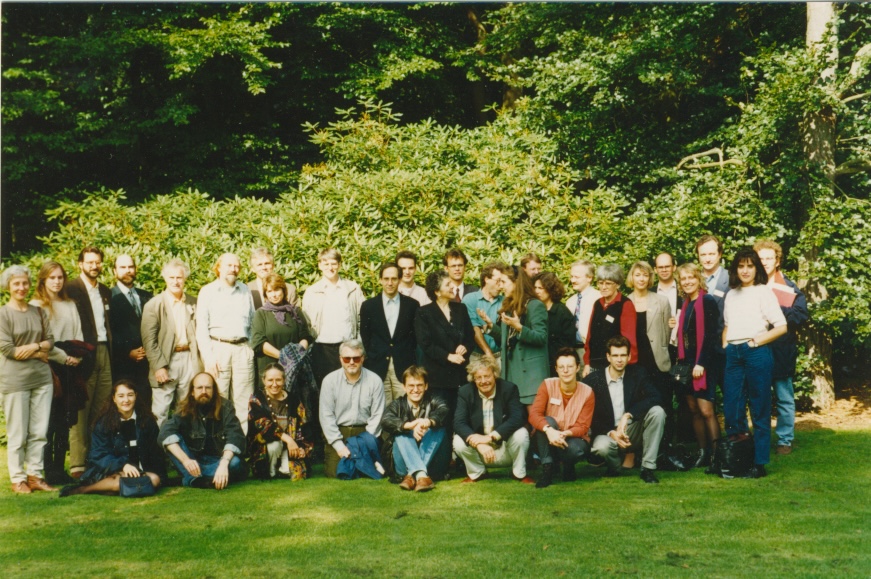
Some, but not all, of the Conferences attendants
Afterwards, we went to Amsterdam; on a bridge we exchanged a kiss and I took Neelchen to the airport. (I only started to call her Neelchen, after I researched the lives of the Brothers Grimm, for my book Tales of Magic (2012)).
At the time, I still lived in The Hague, in the Sinaasappelstraat. But I already was finding the Netherlands way too flat, also in the metaforical sense and at a previous conference, in Exeter (UK), I had met Carol, who lived in Ann Arbor (Michigan) and we had started an affair. In 1994, this had (more or less) ended, as it appeared difficult to keep it up to travel up and down, while I was (still) trying to find as position in The Netherlands, and I also couldn't find one at the University of Michigan. Thus, you could call the UK a compromise, only love doesn't deal in compromises: it happens. And I had also already been in London (staying with Lyndal, although that was just convenient).
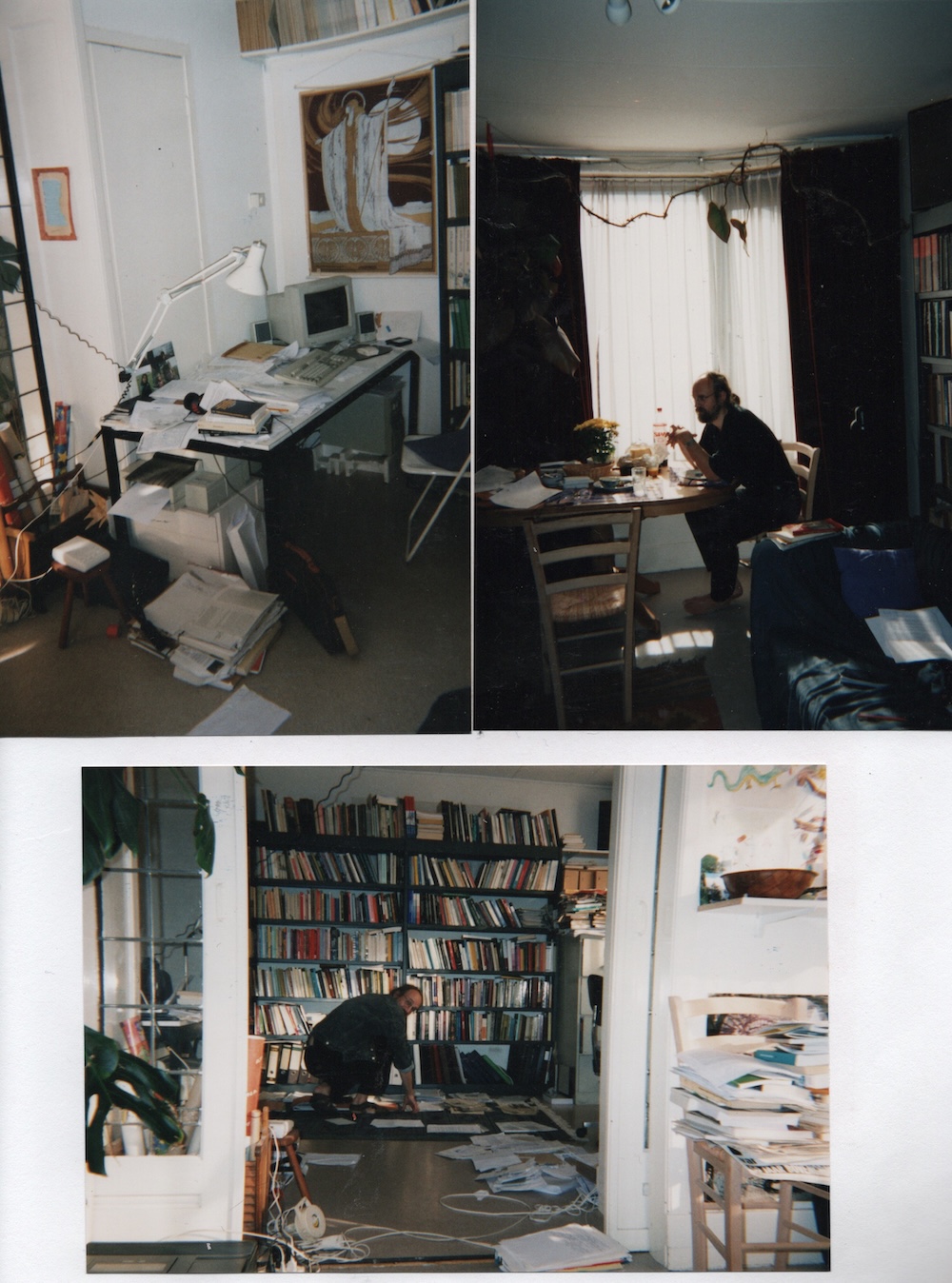
Sinaasappelstraat
The pictures above show me preparing for the move (direction UK).
I travelled to Cologne where Neelchen had a conference. We walked along the Rhine (and stayed in the hotel-room) and I also went with her to Berlin, where her friend lived at the Schlachtensee, where we could swim. To cut a long story short (I will do that more often below): Five years after Woudschoten, we married, at Anne of Cleves House in Lewes, on 24 September 1999.
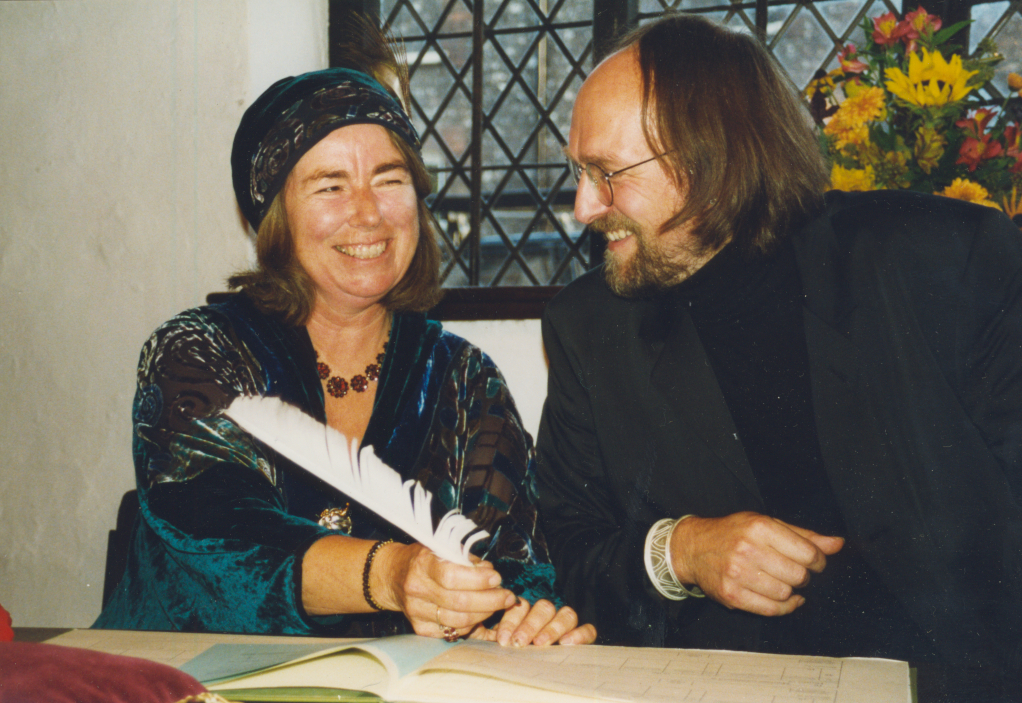
Lewes was, of course, much closer to Maynards Green, where Sicklehatch was situated.
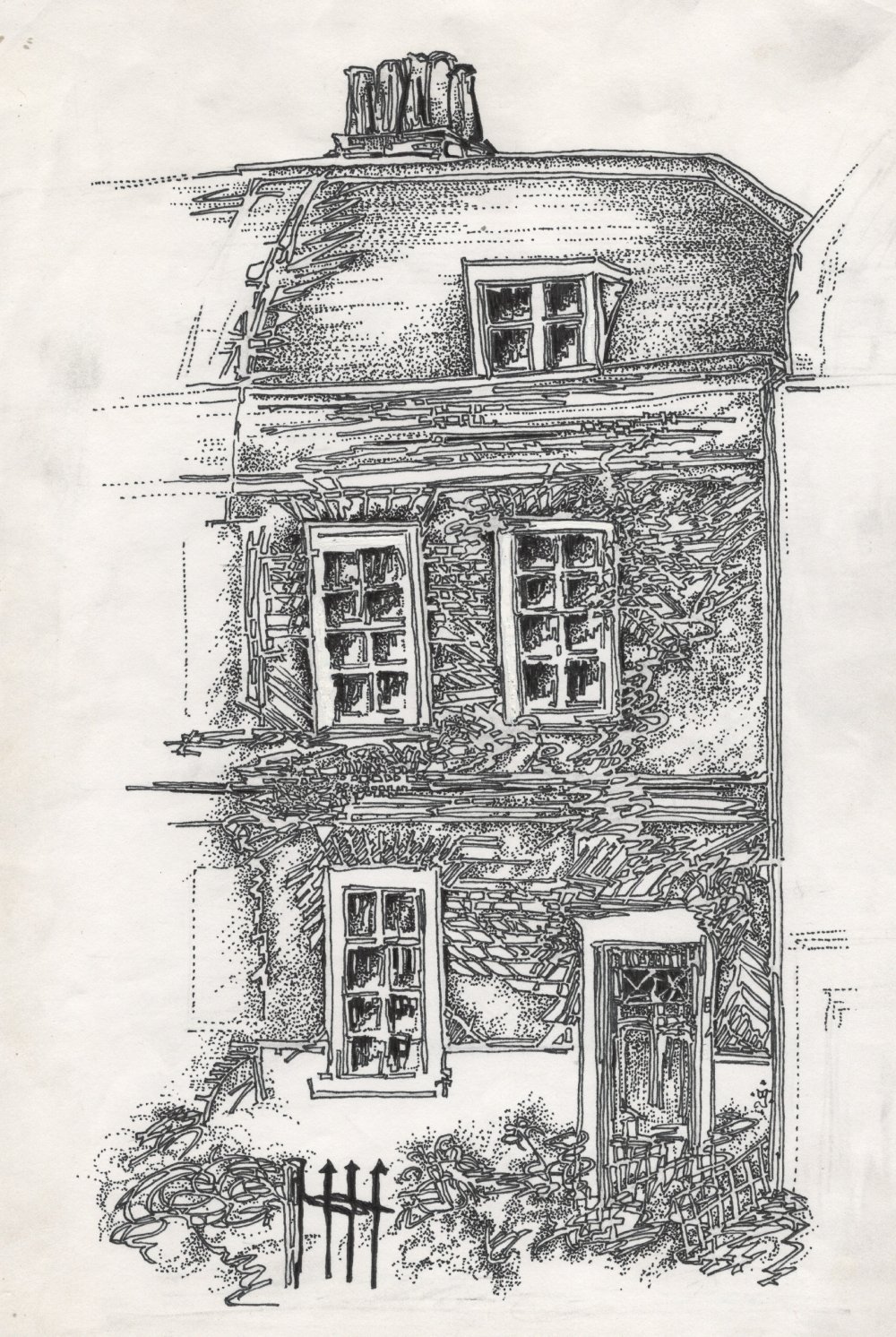
But my stay in the UK started in London. Cornelie was (temporarily) living in Well Walk (at the other side of the Heath) and I joined her there before she could move into Pond Square, which was to be our main abode. When we moved, I made a drawing of PS, that could serve as a Change of Address.
Sicklehatch had
always been Cornelie’s (it was bought with the inheritance from her
parents) and it was kept as a kind of refuge, where her children,
could go whenever they wanted.
We
lived in Pond Square, as long as Cornelie worked in Roehampton; after
she was pensioned, we moved permanently to Sicklehatch. In the
meantime, we had already started to have Sicklehatch rebuilt; in 1999
the main house was “under construction”. Pond Square
was sold and we went to permanently live in Sicklehatch. But as
Cornelie could not leave Highgate behind, she found a flat in North
Grove. We had gone to Sicklehatch occasionally; we celebrated our
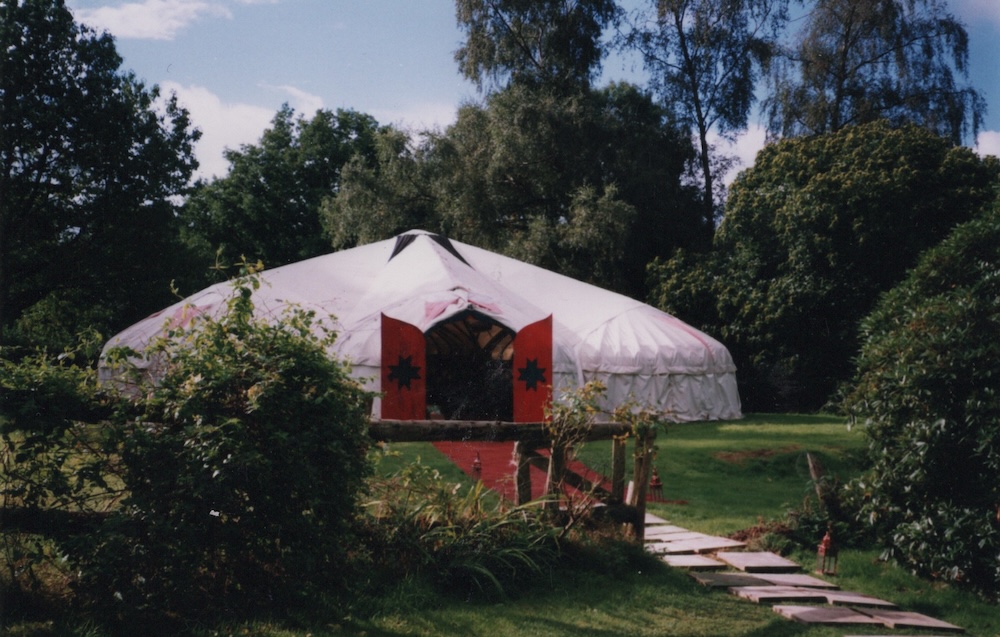
marriage there in a big tent on the lawn in front of it (for the lawn
to be accessible, the cows of Albert, the farmer next door had to be
removed; we persuaded Derek (and other neighbour) to put his sheep in
the first field; they cows went – temporarily – to the next
field and from there back to Albert’s own fields.
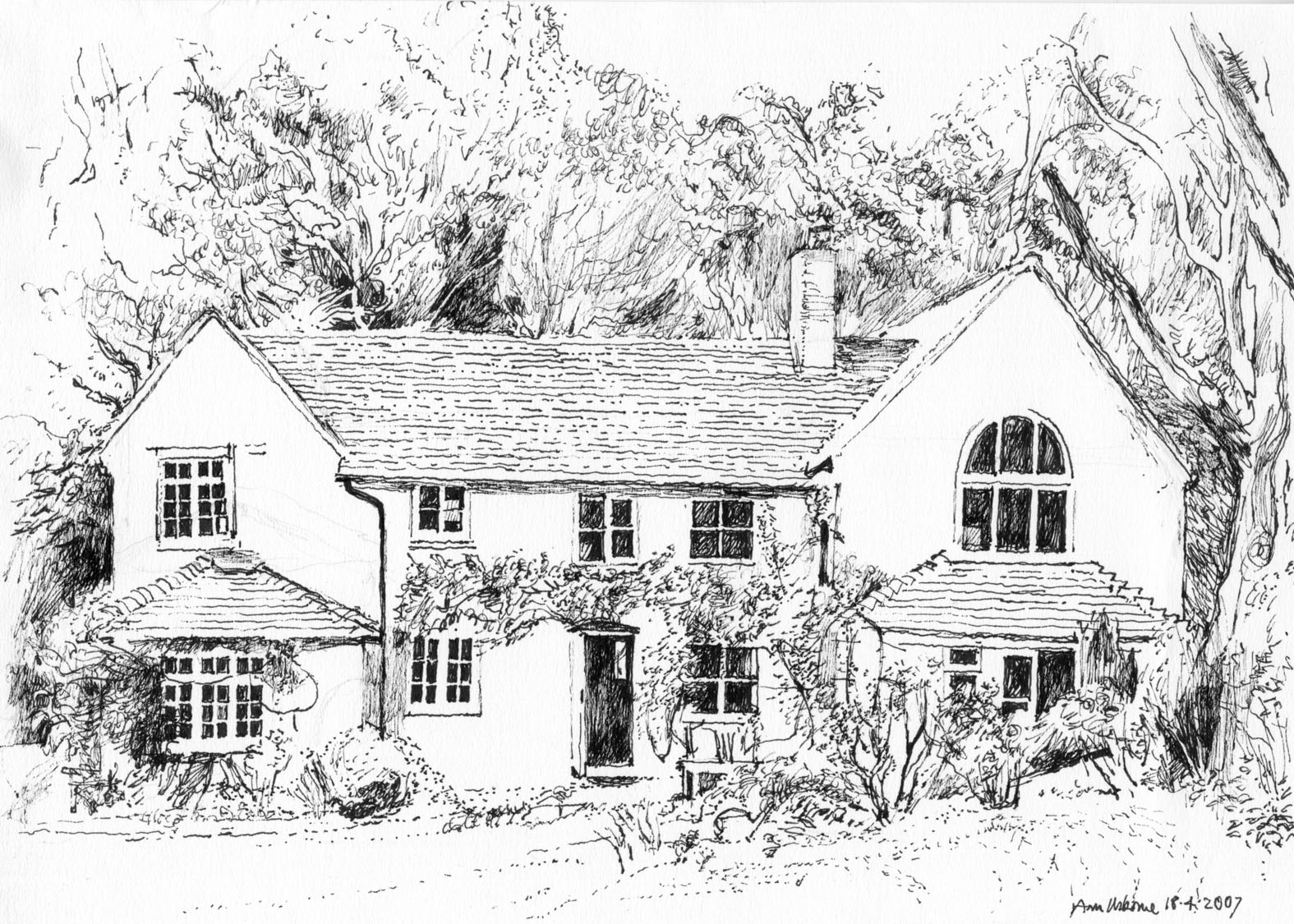
Drawing by Ann Usborne
Sicklehatch under construction
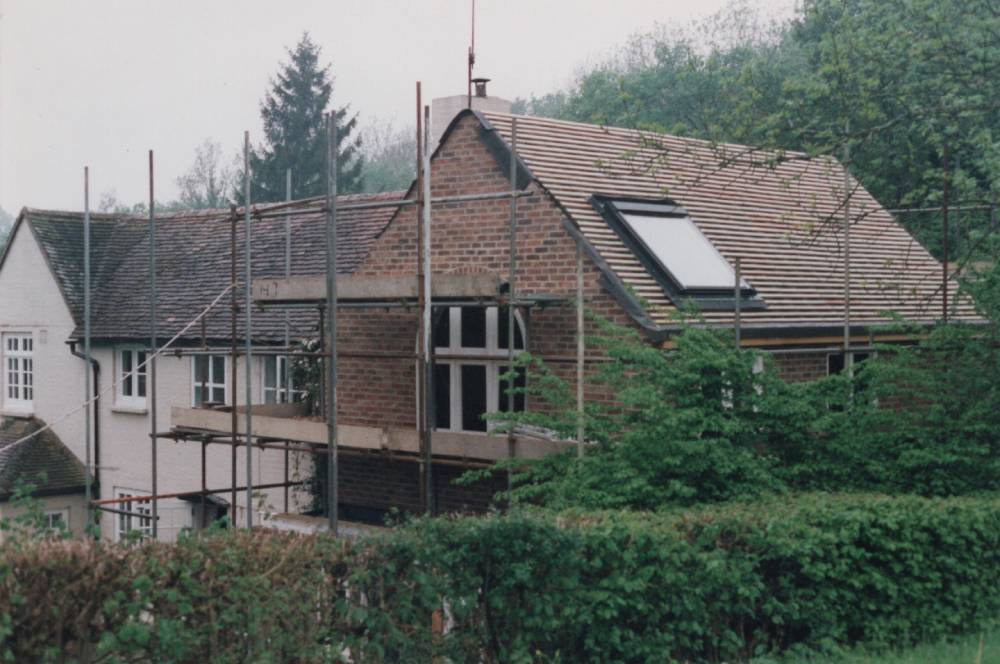
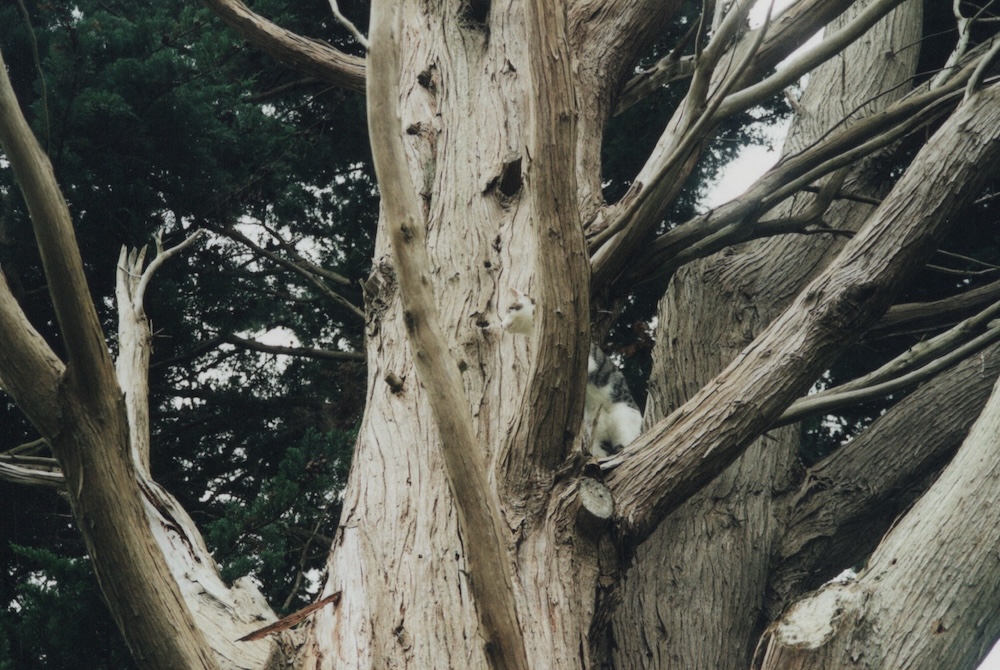
In 1999 we also started to rebuilt Sicklehatch. The new part (shown above) replaced the entrance and a small corridor to the loo. Alongside (and outside) the small corridor, was a path to a garage and next to the garage stood a big tree, in which one of the cats loved to climb – once Alex went in there, too. We also needed to put in a few repairs.
Living in
Sicklehatch was always a project in phases.
As
I (also in the UK) couldn’t get a position (believe me, I tried for
years), I considered Sicklehatch my abode (more than Pond Square).
At
the end of 2001, I even celebrated my 50th birthday there.We had a meal on the evening of the 29th, with my family and friends: Isa, Bram, Arjen, Cor, and Roos.
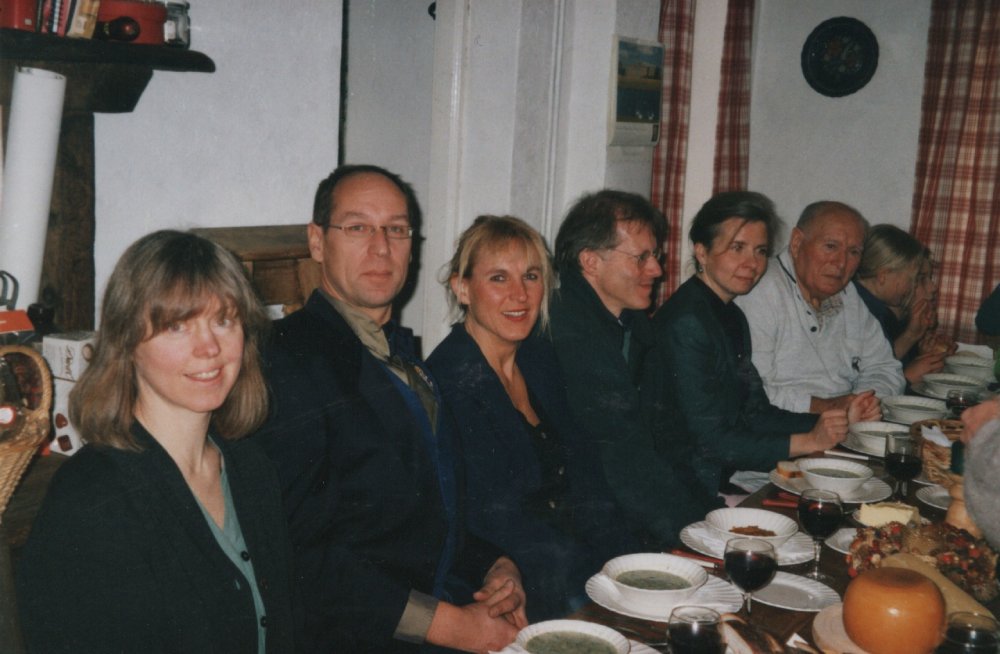
And (not pictured) Alex, Janine, Marike, Johannes, Anne, Rie, Jenny and Michel.
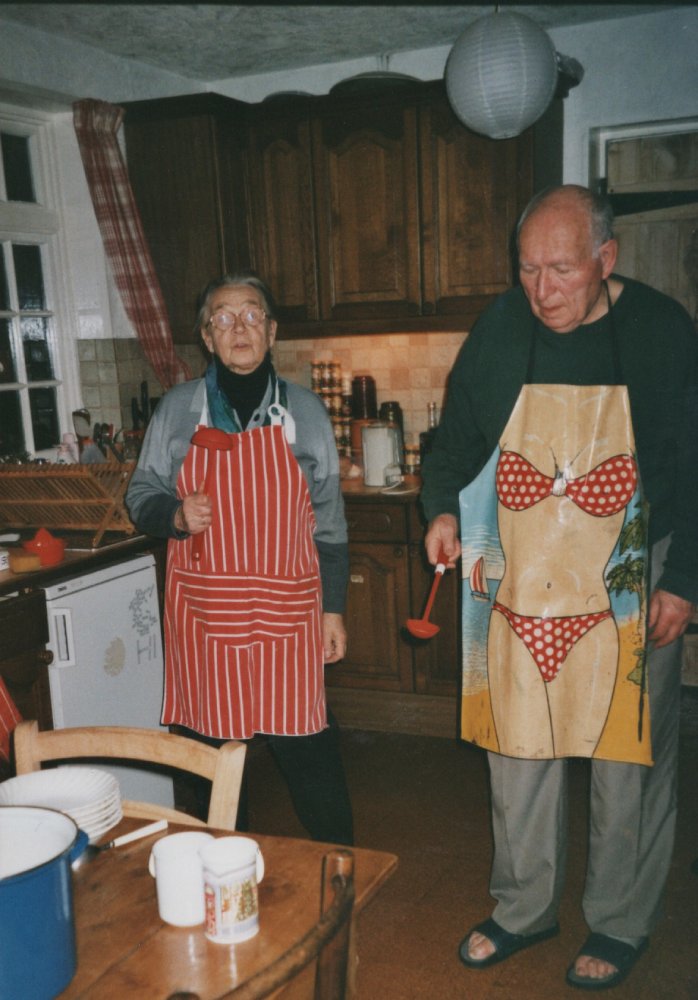
The whole family was (more or less) complete –my parents where still in the land of the living (pictured below; although they were divorced for twenty five years) and my brother was still together with his wife (although she had stayed behind in Dutchland with their youngest son).
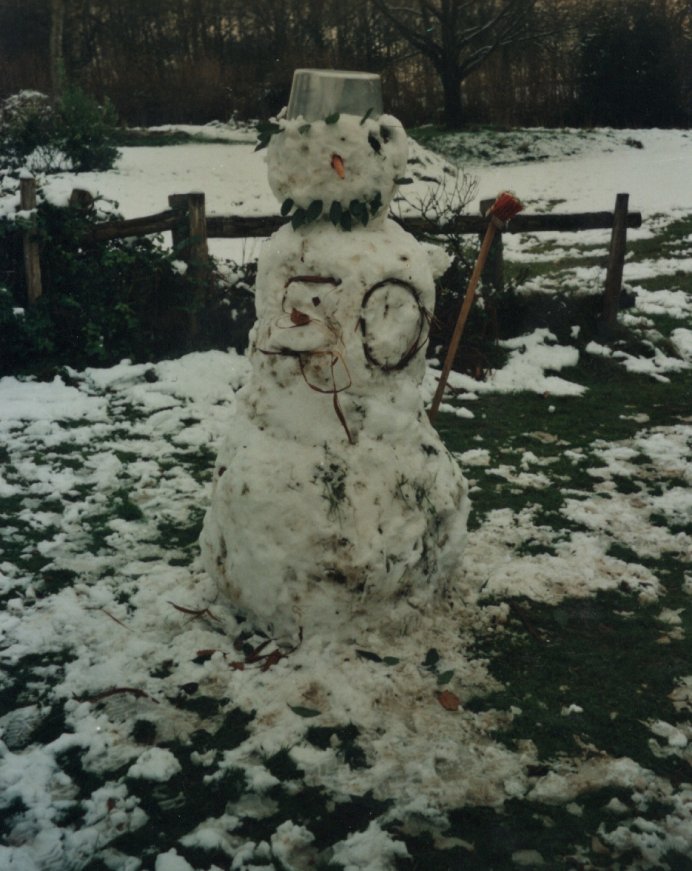
A snowman was built outside, with a big 50 on it (I think I called him Abraham; as I found this more appropiate than the real one, which I also received). However, the next morning, the snow was starting to melt.
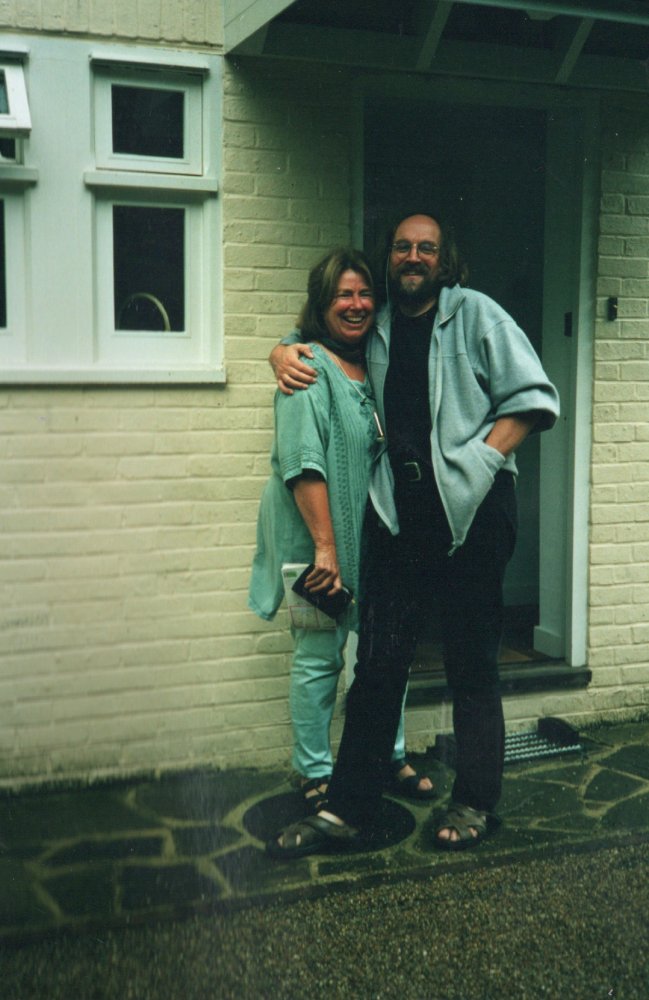
Thinking about the last seven years they appear to me like eternity with you at my side.
Why is it that we share so much in this life when we are at the same time so different?
I cannot now do without your affection and gentleness but I admire, too, your idealism and your sense of fun and adventure, your respect for all creatures, human and animal and of course your patience to put up with my impatience and crazes and obstinacy.
I hope for us to have another eternity together!
C.
|
And I was presented with a BIRTHDAY BOOK.
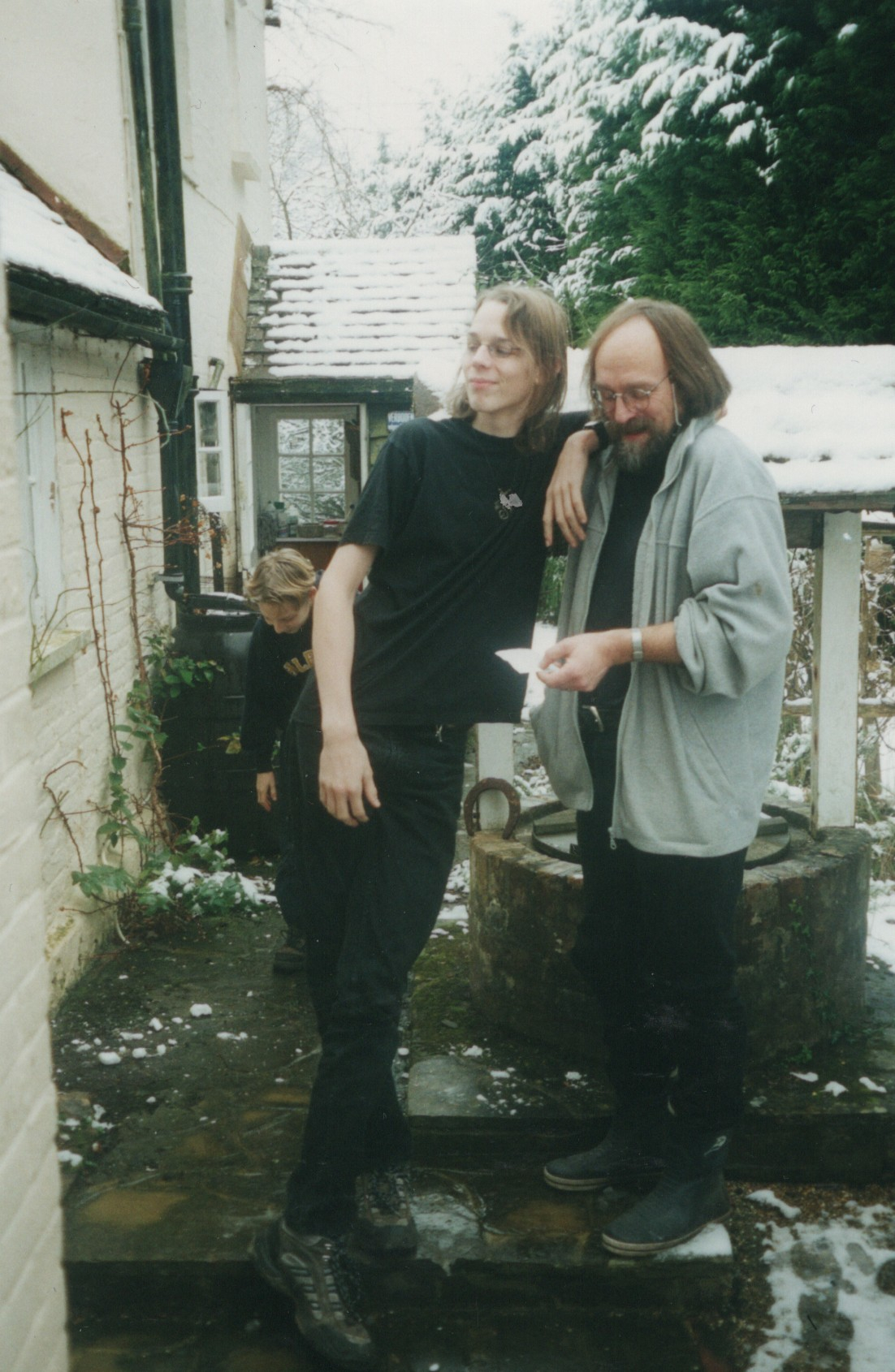
This book is truly a record of me and C. from Woudschoten, 21-25 September 1994 (were it all started, see above) to the end of 2001. It even has photos of the Sinaasappelstraat (also above, but not those that are in the book), the (red) Pond Square card (and even a photo of Annelie & Thilo (C.’s cousin and his wife) and me in front of Pond Square). And a picture that was taken through the window of P.S.
It has pictures of The Old Sicklehatch, and the Blue bell walk, and of Alex and me in 1977 (including me on the tractor).
In 1995 we went to Berlin, to celebrate C.’s birthday at Steffi’s (one of C.’s best friends).
On 18 October 1996, we organised in London, a “Symposium on Alternative medicine in modern Europe” (our first joint workshop).
And in the summer of 1999, our first joint publication appeared in Medical History: Alternative Medicine in Europe since 1800, of which we were Guest Editors, contributing the Preface and our own article Women’s Medicine, Women’s Culture: Abortion and Fortune-Telling in early Twentieth-Century Germany and the Netherlands. (Other contributors were: Matthew Ramsey, Elisabeth Meyer-Renschhausen, Robert Jütte, and Frank Huisman).
The joint effort kept coming, in May 1999: A review article, called Pains of the Past, about Recent Research in the Social History of Medicine in Germany.
Also in 1999, Cornelie & Meg (Arnot) edited the book Gender and Crime in Modern Europe, to which I contributed ‘Dutch Difference? The prosecution of unlicensed midwives in the late nineteenth-century Netherlands’ (p. 189-203). (Meg was a collegue of C. in Roehampton).
There are more photos, among others of us (with Anna and Henry) in Anna’s Kitchen (good friends of C,); of Annelie & Thilo (and Alex) in Sicklehatch in 1997, and of Eva and Nora (Labouvie; I’d met Eva through the AKIH) in Sicklehatch in Mai 1999.
On Sylvester 1998 we were with Werner und Marliese in Nymphenburg (Werner was C.’s brother), and also with Gudrun and Stilz in Gauting (Gudrun was another best friend of C.). New Year 1999 we spent in Diessen with Heide and Eva (and Suze) (C.’s Eva was the daughter of Werner).
And Xmas 1999 we were back in Pond Square with Nicola, Martin (C.’s children), Ann (Usborne), and Alex.
In 1999 [I just follow the sequence of the Birthday Book], we had our first time skiing in Switserland: Martin came with Antonia (his then girlfriend). Also in 1999, we went to Scotland.
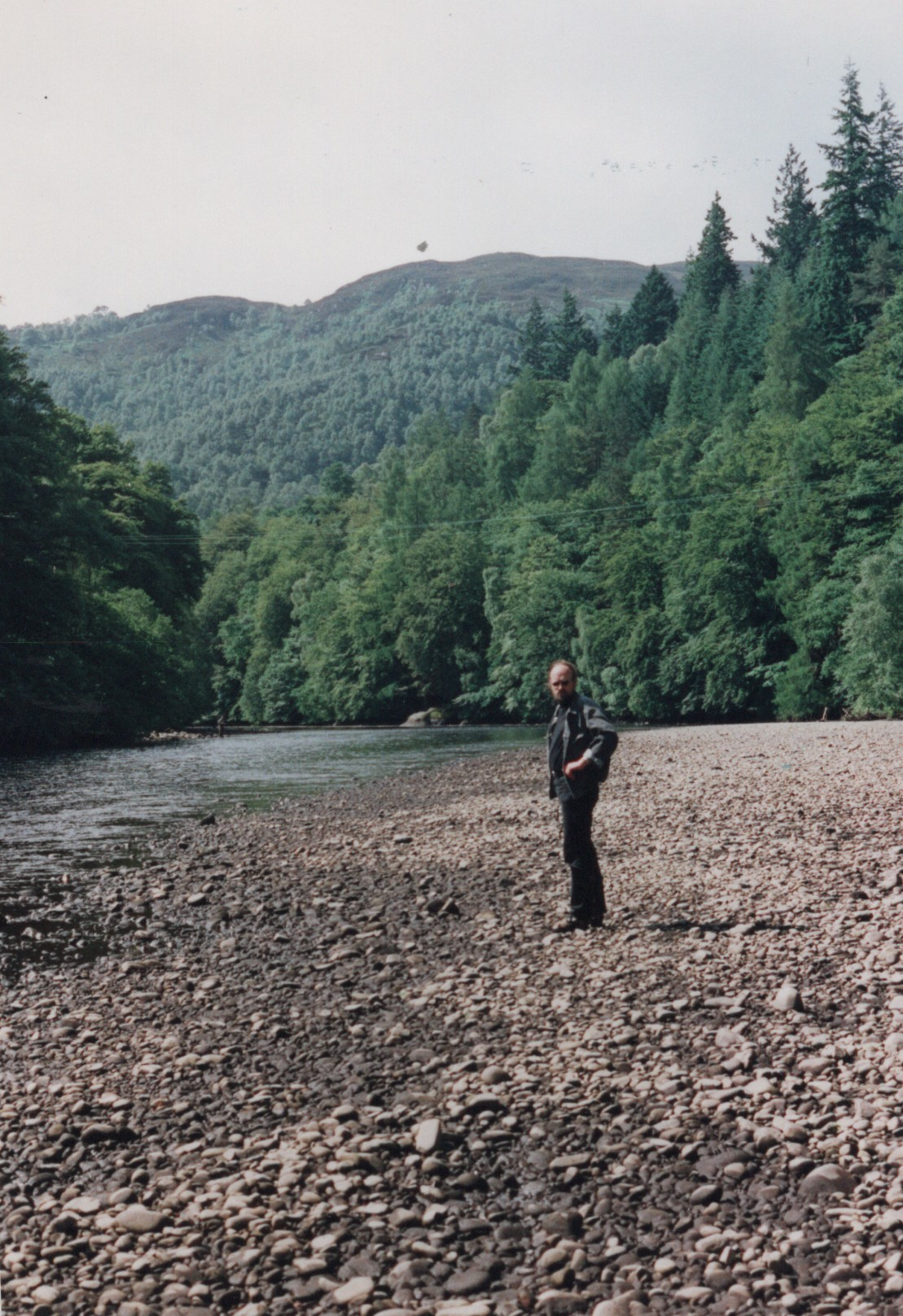
And “Willem’s new Sicklehatch” was under construction.
From 10-12 September 1999, we organised an international conference in Amsterdam, The Meaning of Medicine. In October 1999, I launched my new book Het Amazonenleger. Irreguliere genezeressen in Nederland 1850-1930 (Amsterdam University Press). It was joined with a Radio Interview.
I celebrated my 48th birthday in Sicklehatch (with Alex) and New Year’s Eve 1999, too (with Micha (Machteld’s then husband), Machteld, Ann (Peter’s cousin), and Anne, (a French woman who had moved to London and been alerted to us).
In April 2000 we were in Pontresima (to langlauf), where Martin and Anthonia were, too.
In 2000, Eva took a photo of us on the Seven Sisters. At the same year Martin (and his dog Billy) were in Sicklehatch. In June 2000 Christine (Peter’s sister), Barnaby and Tricia (also Peter’s family) visited Sicklehatch.
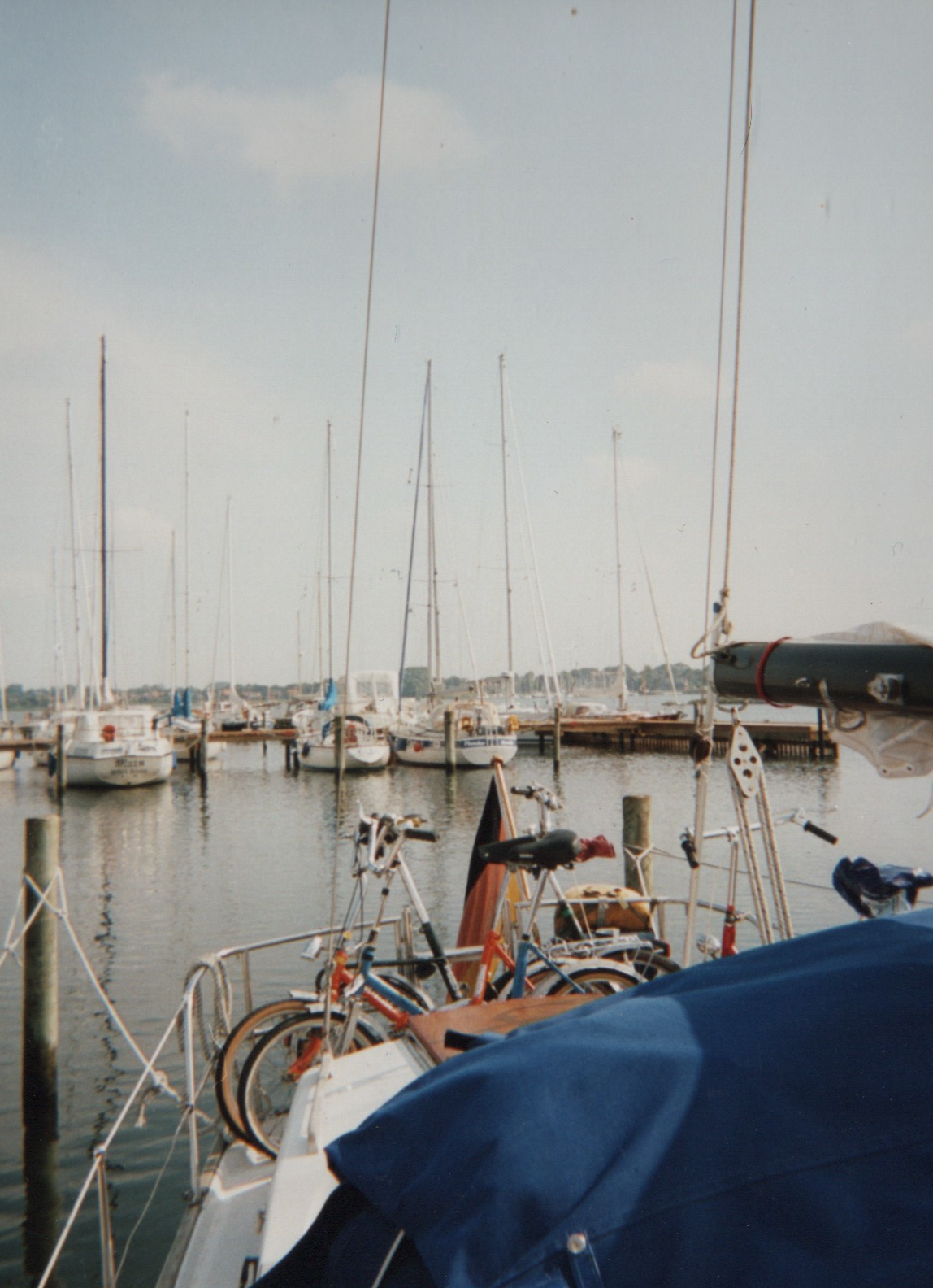
In August 2000, we went sailing from Kiel with Heinrich (a brother of Thilo) and Heinke, and we also took the opportunity to visit Annelie and Thilo (and [their daughter] Katharina).
In October 2000, we were at Elmau (at the other side of Germany).
And (according to the Pictures in the Birthday Book), in 2000, I celebrated my birthday in Amsterdam (on the boat at Marina’s [Bram’s ex-wife]).
November 2001, we were in New York, visiting Joel and Nicola [later to be married].
Before that, in September 2001 and October 2001, there are pictures of me with Billy (Martin’s dog) in Sicklehatch (the † indicates that he died).
In Nov. 2001 we had a meeting with the (London) Reading Group with Madeleinè (the widow of our dentist), Carmen, Jenny, Shirley (friends of C.), Arjen (Isa’s husband – Isa was the best friend of Machteld), and Ann.
Then the’re more 50th birthday wishes, from Phillip and Christine, from Jackie and Stephen (who, out of experience, told me “that the years after 50 are among the best of your life”), from Rob and Liz, from Caroline and Derek, and from (another) Caroline (all friends of C.).
Then there is an (unsigned) poem in Dutch: The miraculous universe. As it mentions all my interests, even Omeland; it mentions Sicklehatch as my “secret guarden” and it is aligned with little pictures – it is probably written by Jetske, as she was the only one who new about Omeland – which I wrote on my course drama-writing.
Brother Bram used the last ca. 20 pages of the Birthday book to make his own artwork (with a candle) and the wish “... that the next 50 years may be as mysterious as the first...”.
Two contributions to the Birthday Book deserve to be mentioned in full:
the one of (my youngest brother) Johannes:
IS HET GOEIE SOEP?
Eén van jouw kenmerken, Willem, is jouw behoefte aan vastigheid, jouw voorliefde voor tradities. Heel wat dingen hebben kennelijk jouw gehechtheid opgeroepen en veel daarvan doen dat nog steeds. Vader Beer, vegetarisch eten, je verjaardag, je eigen vork en lepel. Wat het eten betreft: bovenstaande vraag heb ik keer op keer uit jouw mond gehoord als je wilde weten of de jus wel vegetarisch was.
Een ander feit, wat naar voren komt nu ik aan je zit te denken is, dat ik je eigenlijk niet eens zo goed ken. Ooit was jouw aanwezigheid zo vanzelfsprekend, dat ik geen aanleiding zag me te verdiepen in de vraag, wie of wat jij nu eigenlijk was. Vervolgens gingen we ieder onze eigen weg. Maar wie weet, misschien doen we er nog eens iets aan.
Johannes.
|
And Owen’s:
Willem,
On this day, when you look back on fifty years & look forward on the next fifty, I would like to add my own small token of regard.
Over the last couple of years I have truly appreciated both your advice & your friendship.
I look forward to our future colladoration, & to benefiting from your wealth of knowledge on all matters magical.
You are truly a cunning-man!
Owen
|
2010 was a next phase; we started to think about my den, to house all my books (and other, accumulating, possessions). To that end, the big tree had to be cut down and the garage demolished.
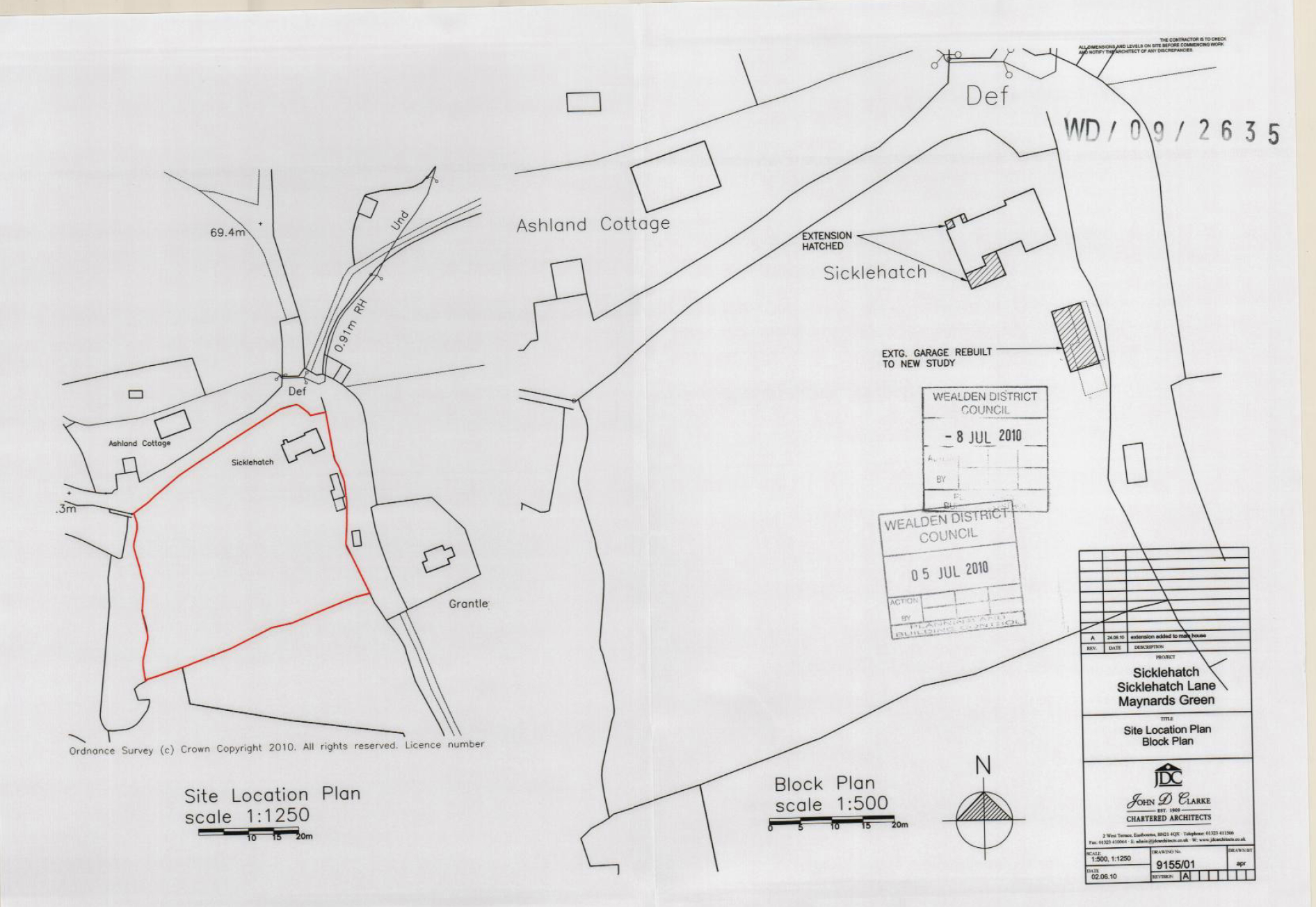
Previously, the garage was cold, badly isolated and barely inhabitable. It was very small with little headroom and fairly overgrown with not enough space for books (and cats), not to mention
that the place was situated in an “Area of Outstanding National
Beauty”. Then, with a little help of a family friend, planning
permission was granted.
And
so, under gentle scrutinizing by the neighbours, Sicklehatch was
supplied with more plans and revisions of plans and further
alterations and additional instructions and directives. Builders
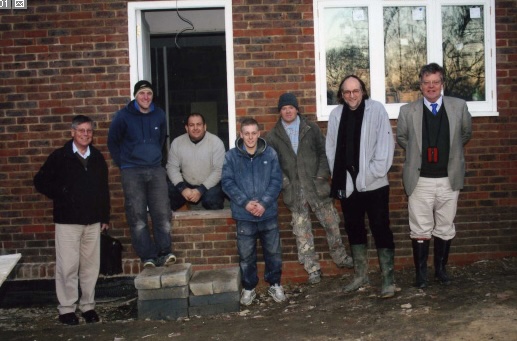
arrived (pictured below in front of my den –
still without steps to the door) and stayed for a year, diggers, electricians,
scaffolding and trenches. When they were finished, it had a spacious
dining room, bedrooms for tall (the sons of me and C.) guests, and
little guests (C.’s grandchildren). Sicklehatch had turned out into a
haven of happiness to accommodate friends and family, where I wanted
to live forever.
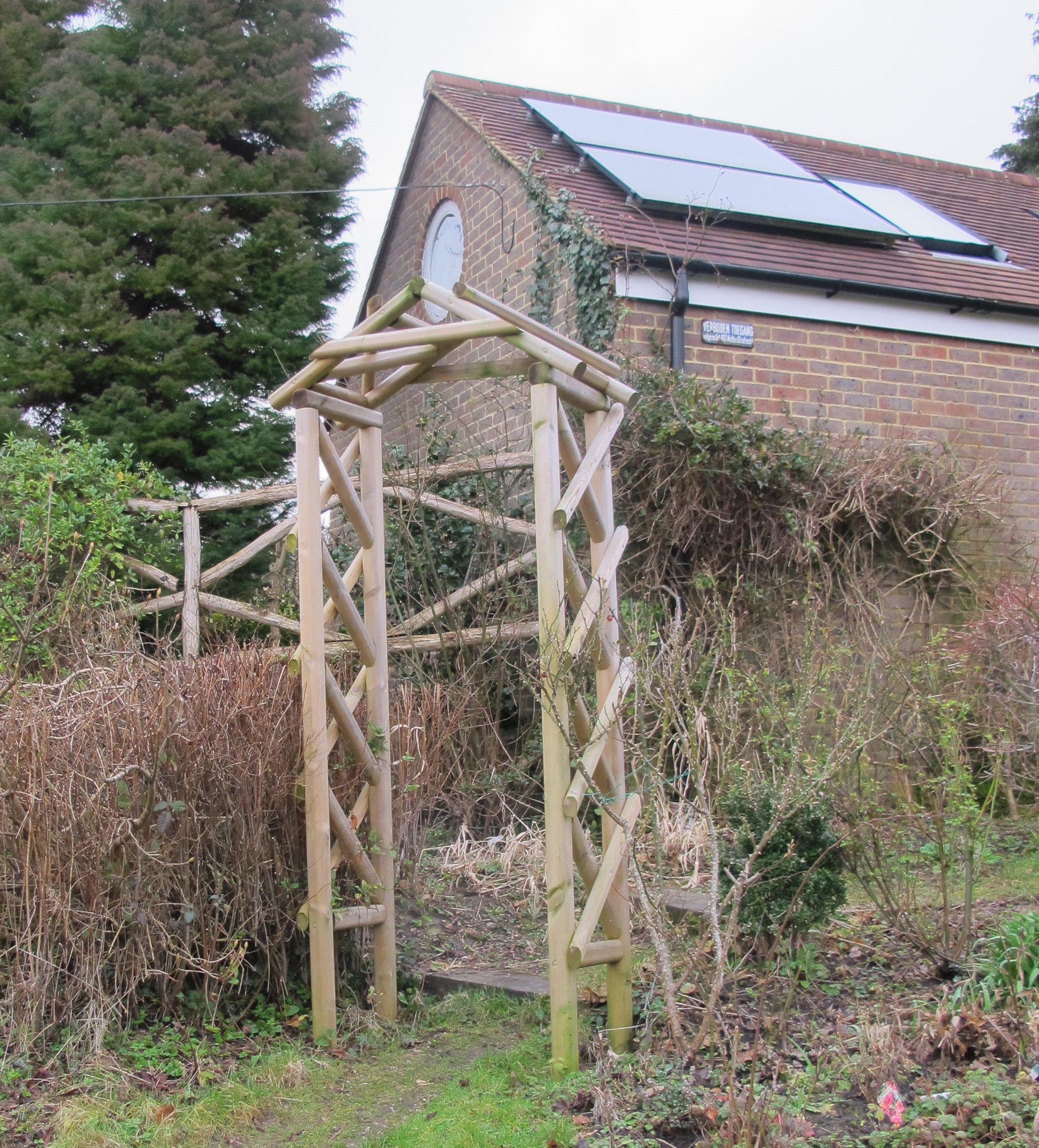
Later the den was supplied with solar panels.
WILDLIFE
Sicklehatch
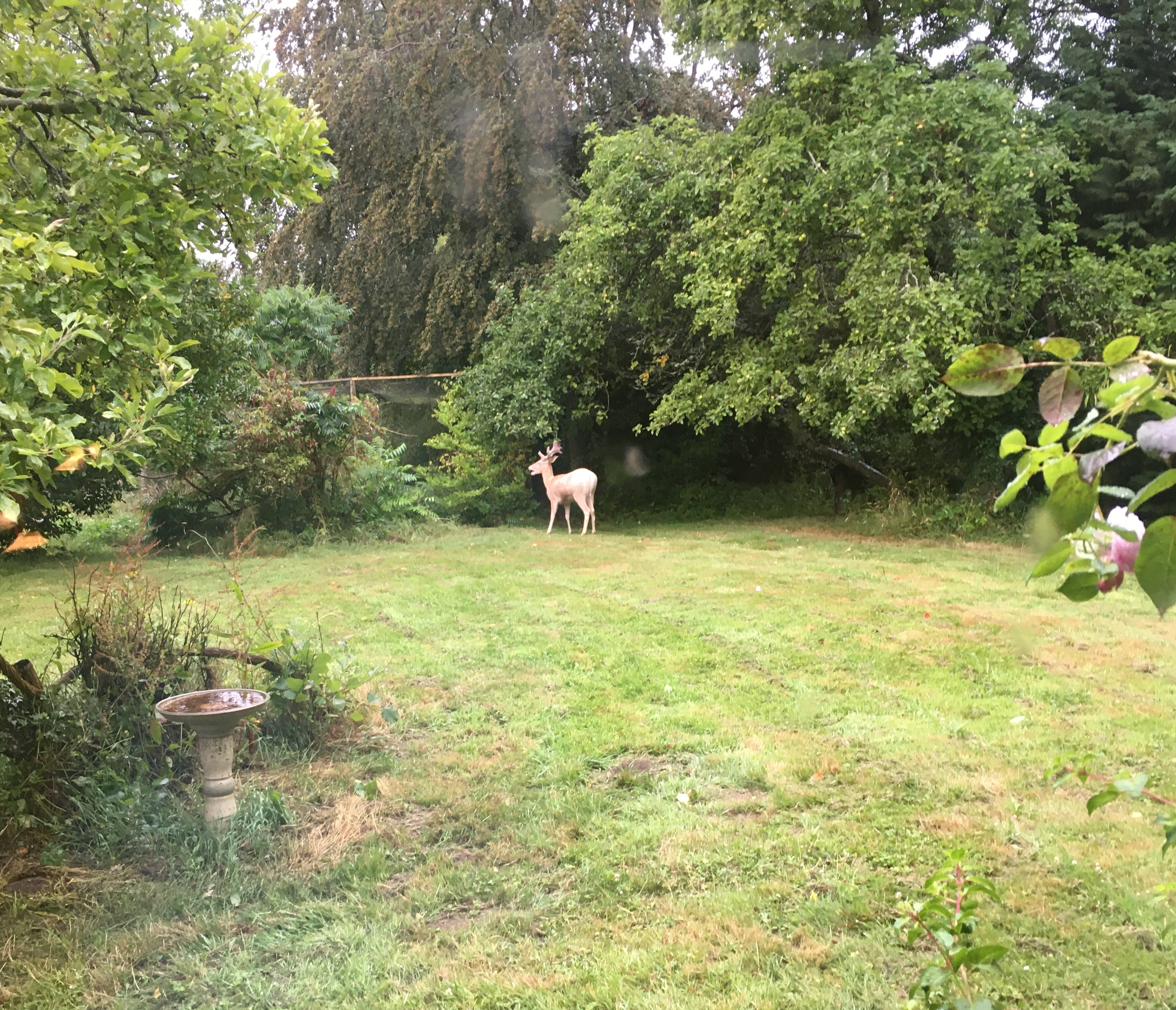
attracted wildlife: this is a deer, photographed from the window of
the kitchen. Apart from the badgers (see below), deer where the main
wildlife in Sicklehatch, not counting the cats or the midges
(although they were surprisingly few).
We
wanted a pond on the second field. Apparently, we engaged the wrong
contractor for it; the pond hardly held water. Luckily Lucy (a member
of our bookgroup in East Sussex) supplied us with the right guy, who
drove in through the lower gate (below the yard with the apple trees,
originally built by Peter) and started to dig a big hole next to the
apple yard, with a dike on the west, sloping down to the brook side.
This
was our swimming pond (even used in the winter).
When
that pond was built, the pond in the second field was repaired, too.
Once
we’d had swimming pond built, it attracted ducks.
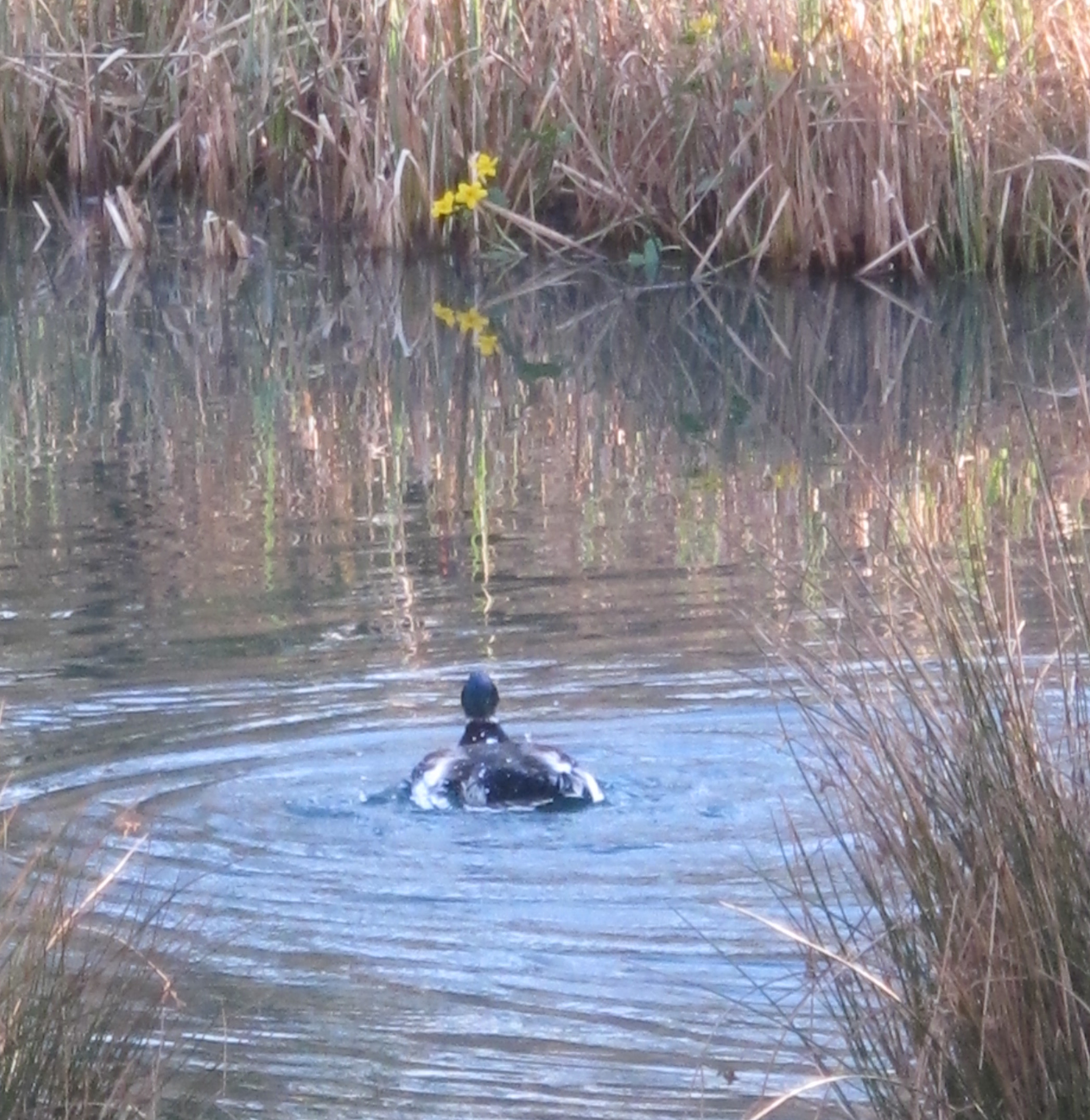
Of
course, there were other birds; I once saw a heron (slightly rare in
East Sussex, but familiar to me – we used to count them in the
train from Haarlem to Amsterdam and there were also many of them in
the Amsterdam Vondelpark) at the pond in the second field.
Supposedly
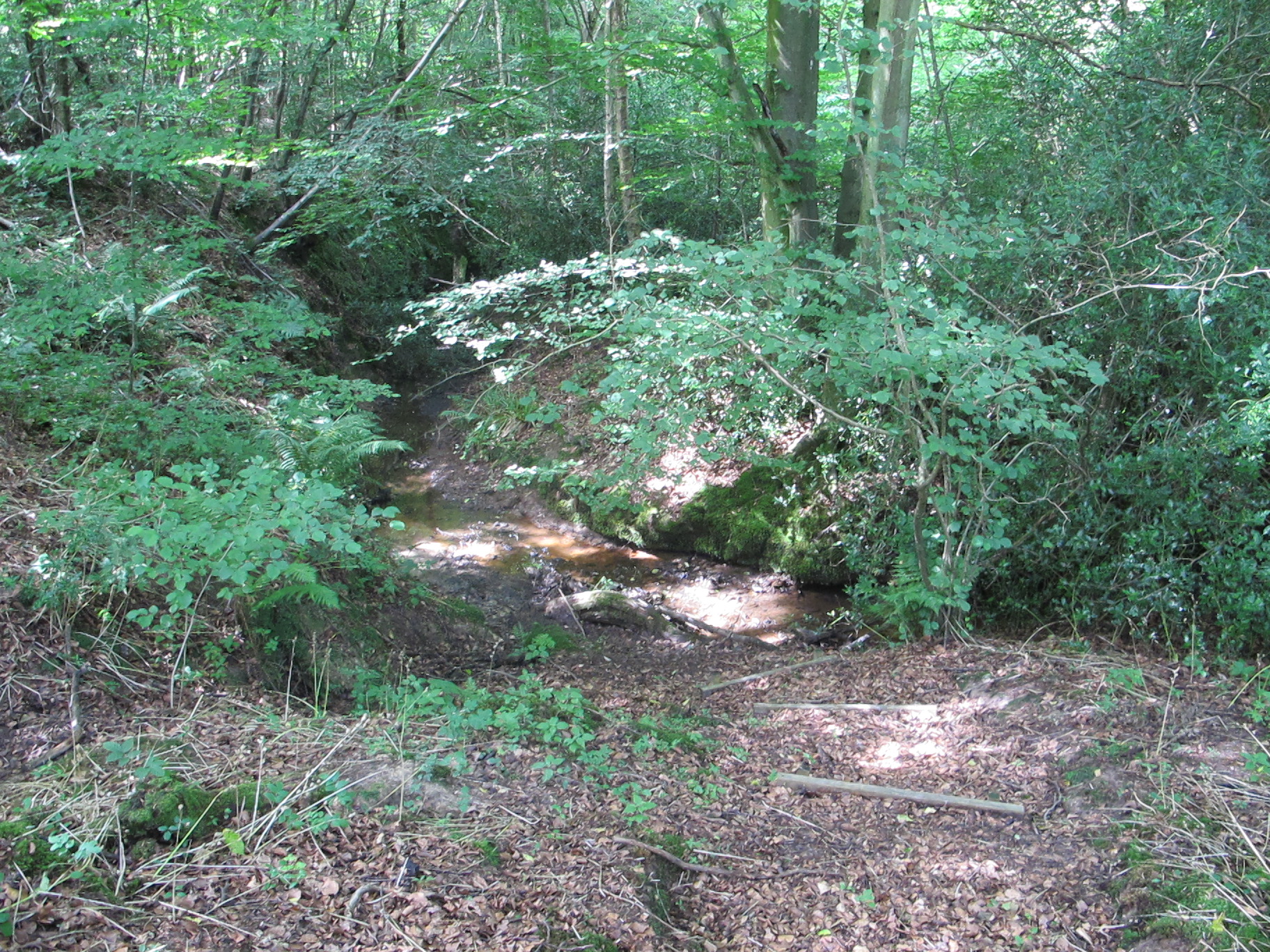
there were some fish in the brook on the west border of Sicklehatch.
However, although we had steps built going down to the brook, I never
noticed any fish. And sometimes, the brook had almost completely
dried out (reduced to a trickle), so that it was easy to jump across.
There
were badgers, too, who had dug a whole on the left side of the steps
(my left going down), and once, a little one ventured as far as the
backside of the main house, but was gone once I could fetch my
camera.
OUTSIDE
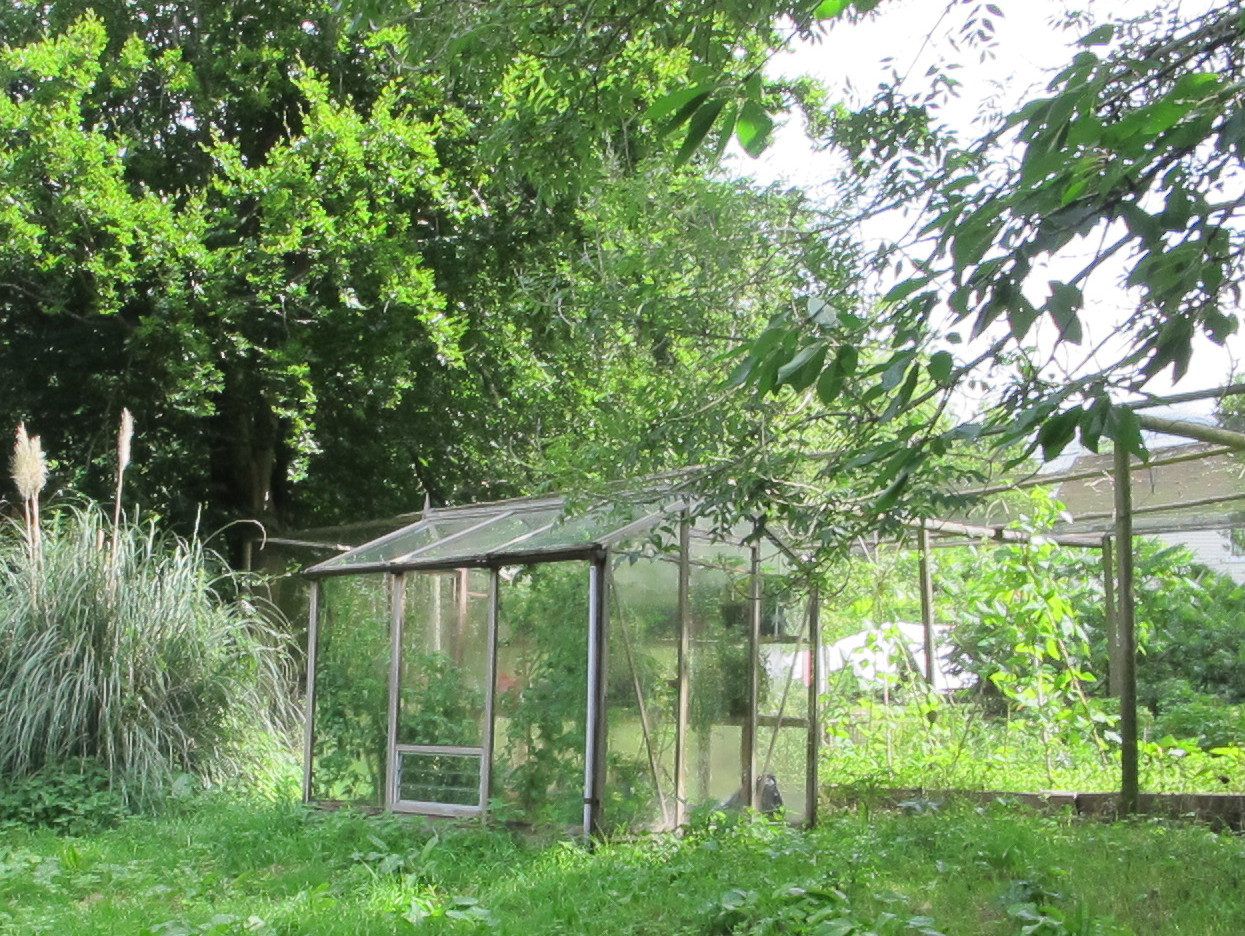
Of course, there was not only wildlife outside, but we, too (at least when it wasn’t raining heavily). We had a cage, to grow vegetables – Cornelie started to grow them without a cage, but then her produce was eaten by birds, or the other wildlife. Later, she also organised a little green house, behind the cage.
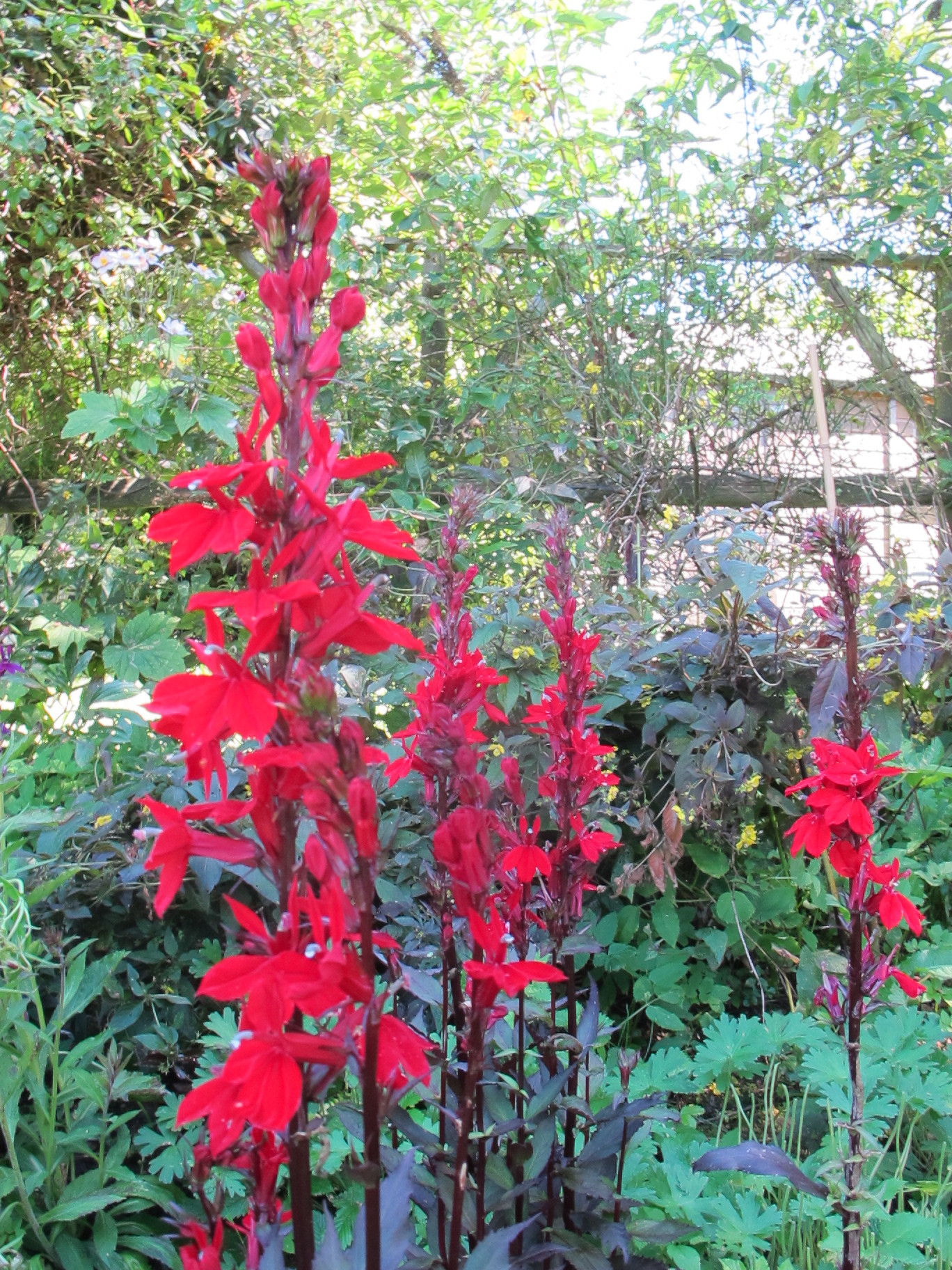
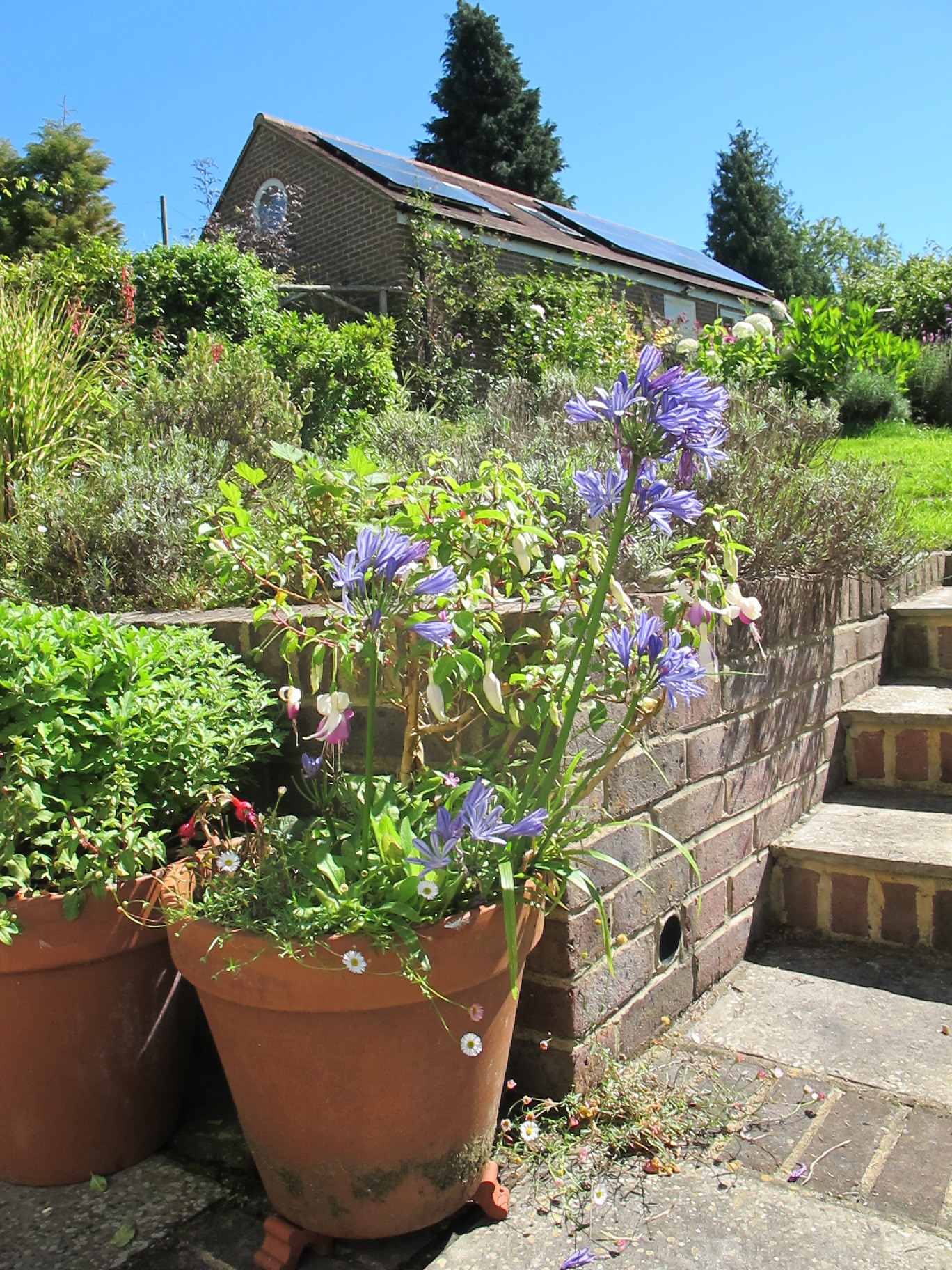
Apart from vegetables, Neelchen also used to grow many flowers, with a preference for roses.
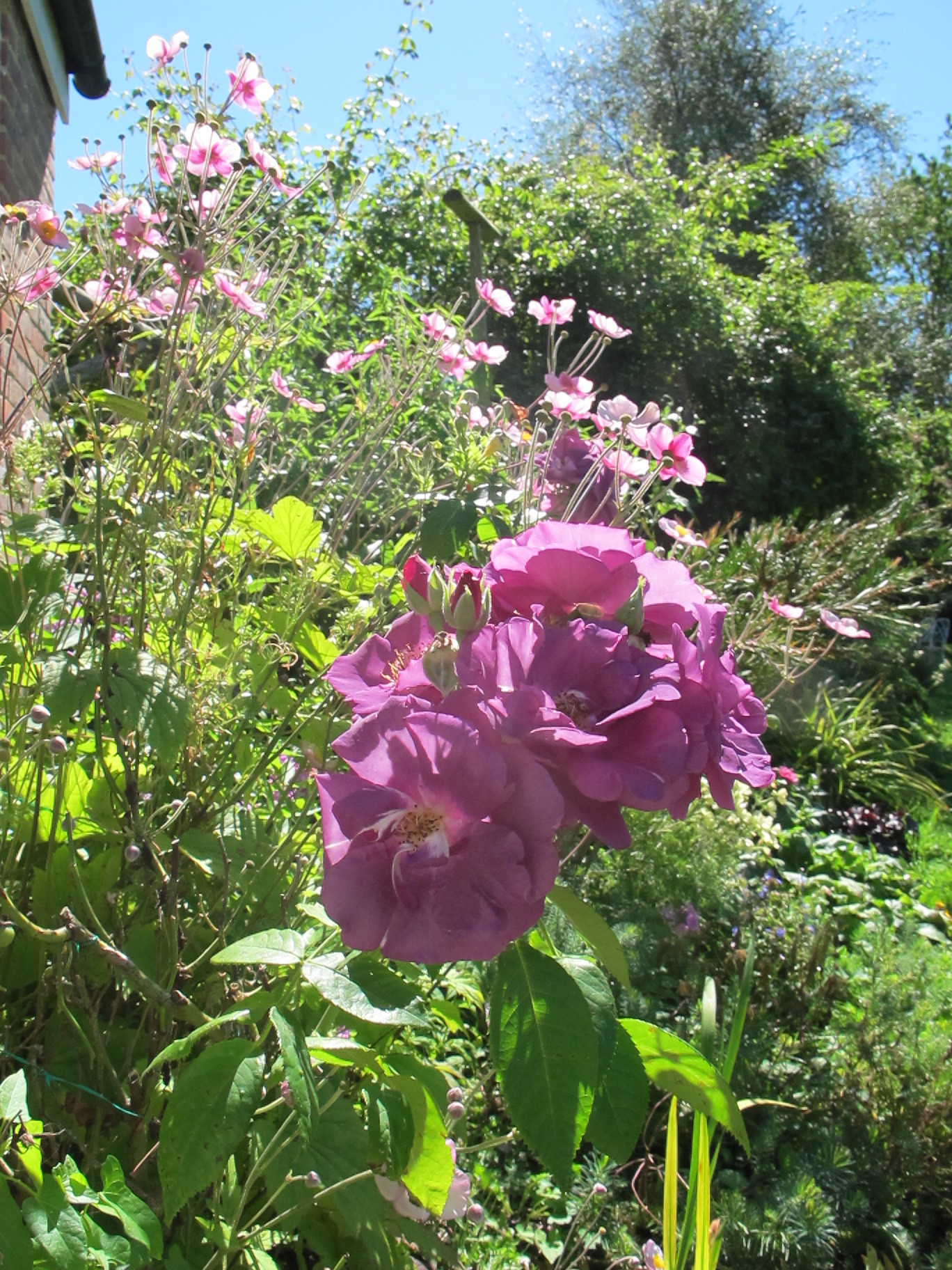
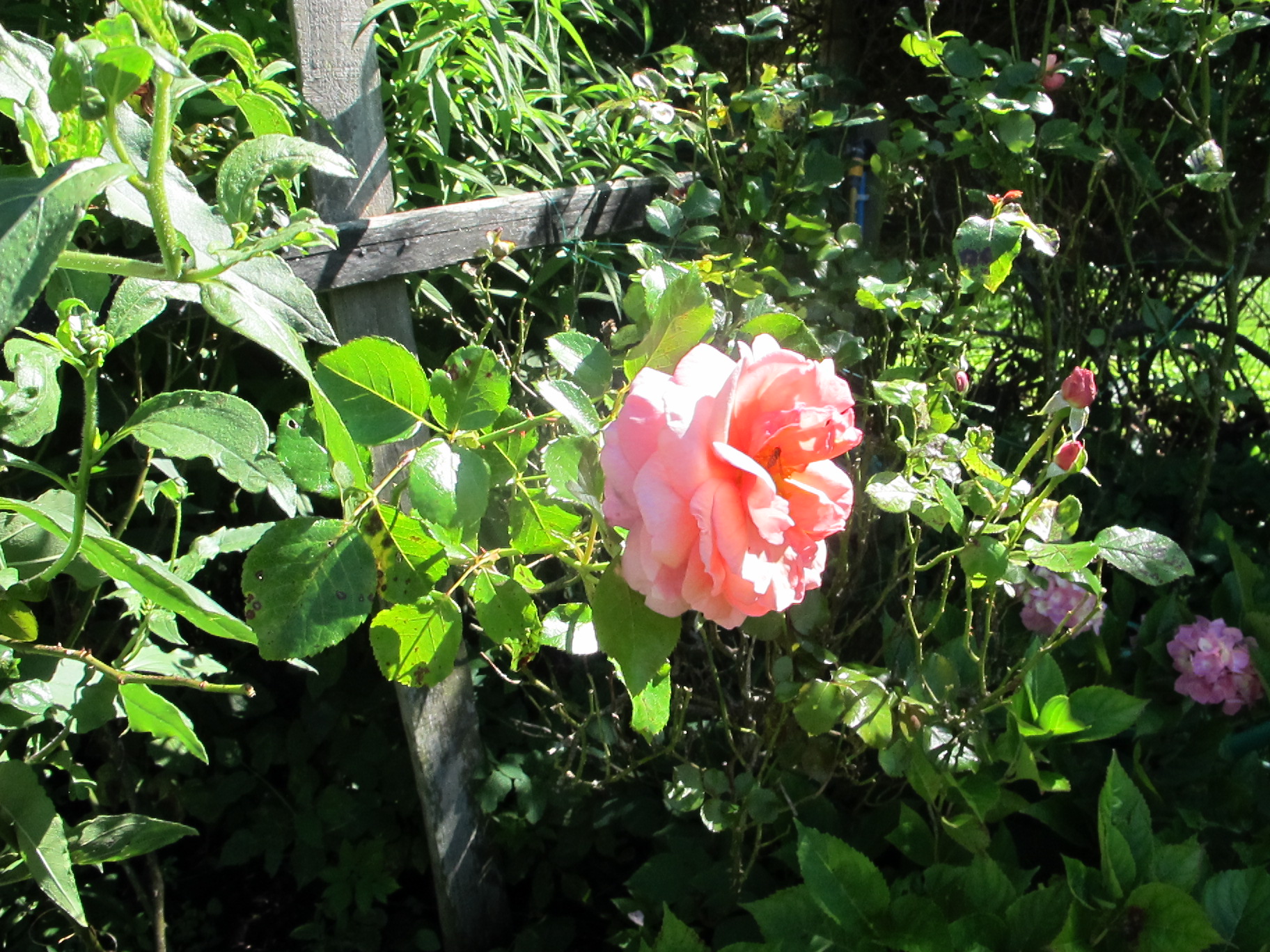
But also many other flowers.
And just outside Sicklehatch, on the other side of the entrance, started Sapperton Wood.
I once called the joining of the roads and paths from the road to Albert, the entrance of Sicklehatch, the road back to Maynards Green (to the bus stop) and the path into Sapperton Wood, a meeting of seven roads – you had to look and count very well. [See this website: Tonke Dragt, chapter 7: De Zevensprong.]
The photo shows Alex and me at the entrance of Sapperton Wood around my birthday.
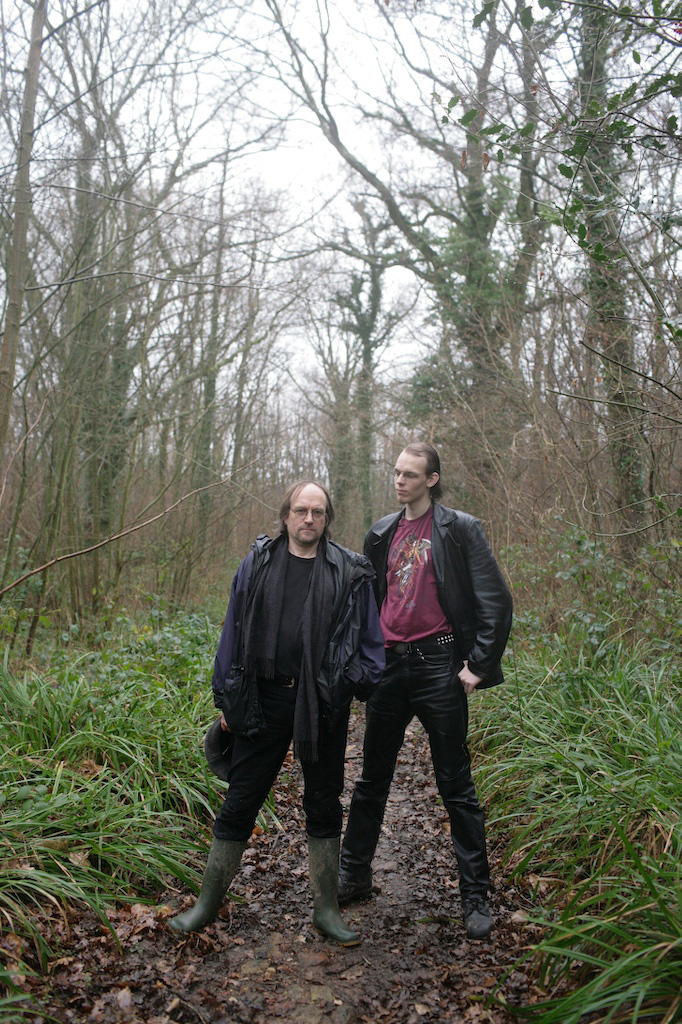
It may be possible to recognize many bits of Sicklehatch in Kloderank.
SEVEN SISTERS
About 15 miles South of Maynards Green, you could come to the Seven Sisters, where we often used to walk. There was a route east to the Light House (just before the spot where people used to jump down the cliffs (preferably not surviving it) and one west to the actual Sisters.
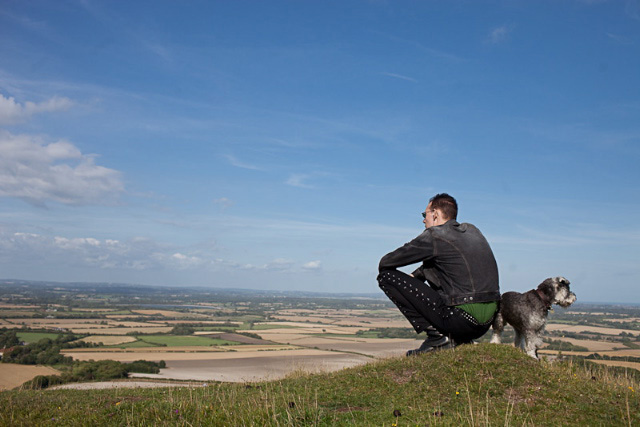
Alex looking out over East Sussex
The Sisters where Chalk Cliffs, with a little bit of grass on top. However, they were very corrosive, which was visible through the row of houses, next to the parking place (where you had the choise to go either east or west) which in the course of years became smaller and smaller.
But we always enjoyed walking on the sisters (and it was always a question how many Sisters we could do); we once walked all seven until we were caught in a thunderstorm – which was supposed to be dangerous on top of the Sisters (but nothing happened to us).
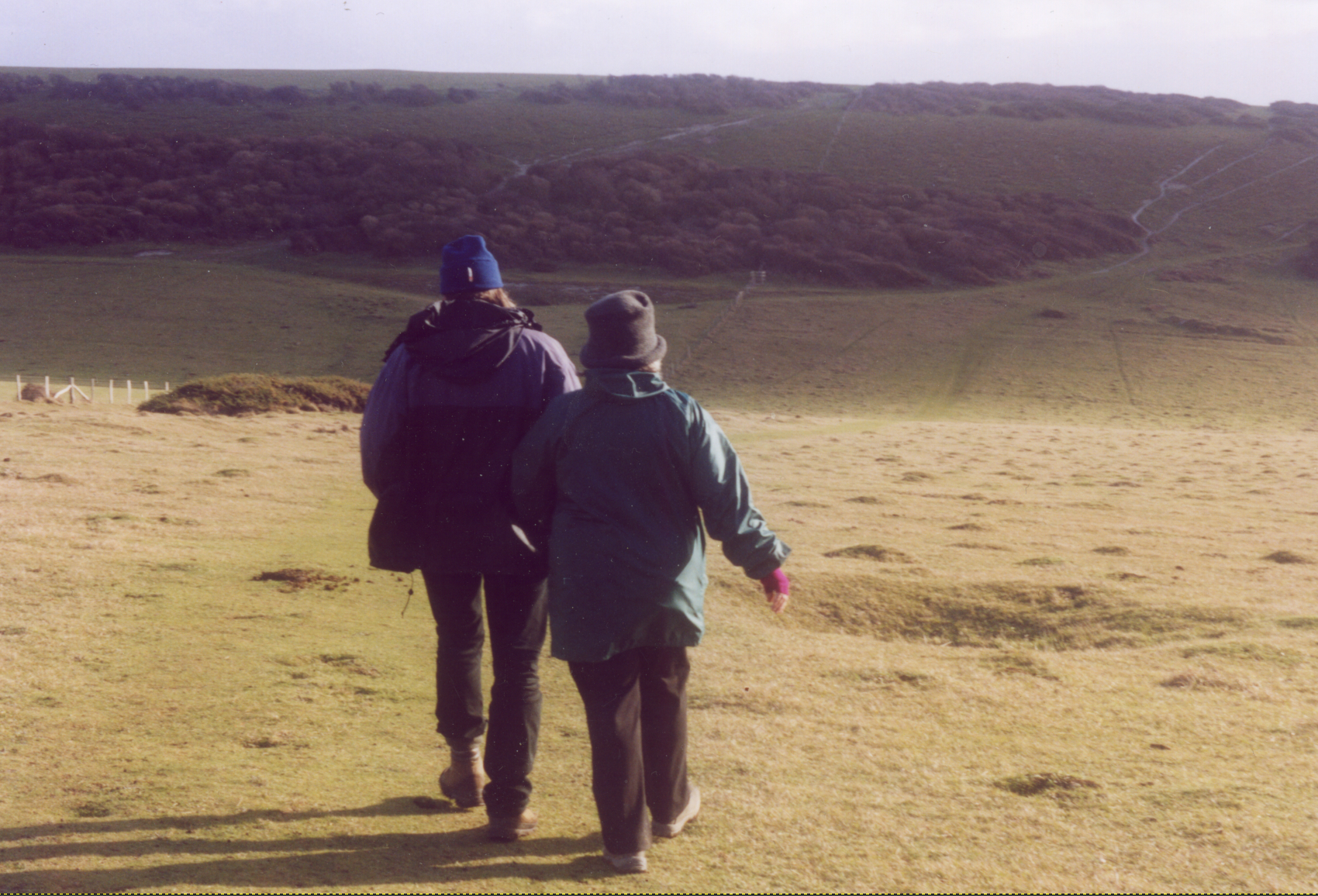
C. & me on the Seven Sisters, Jan. 2006
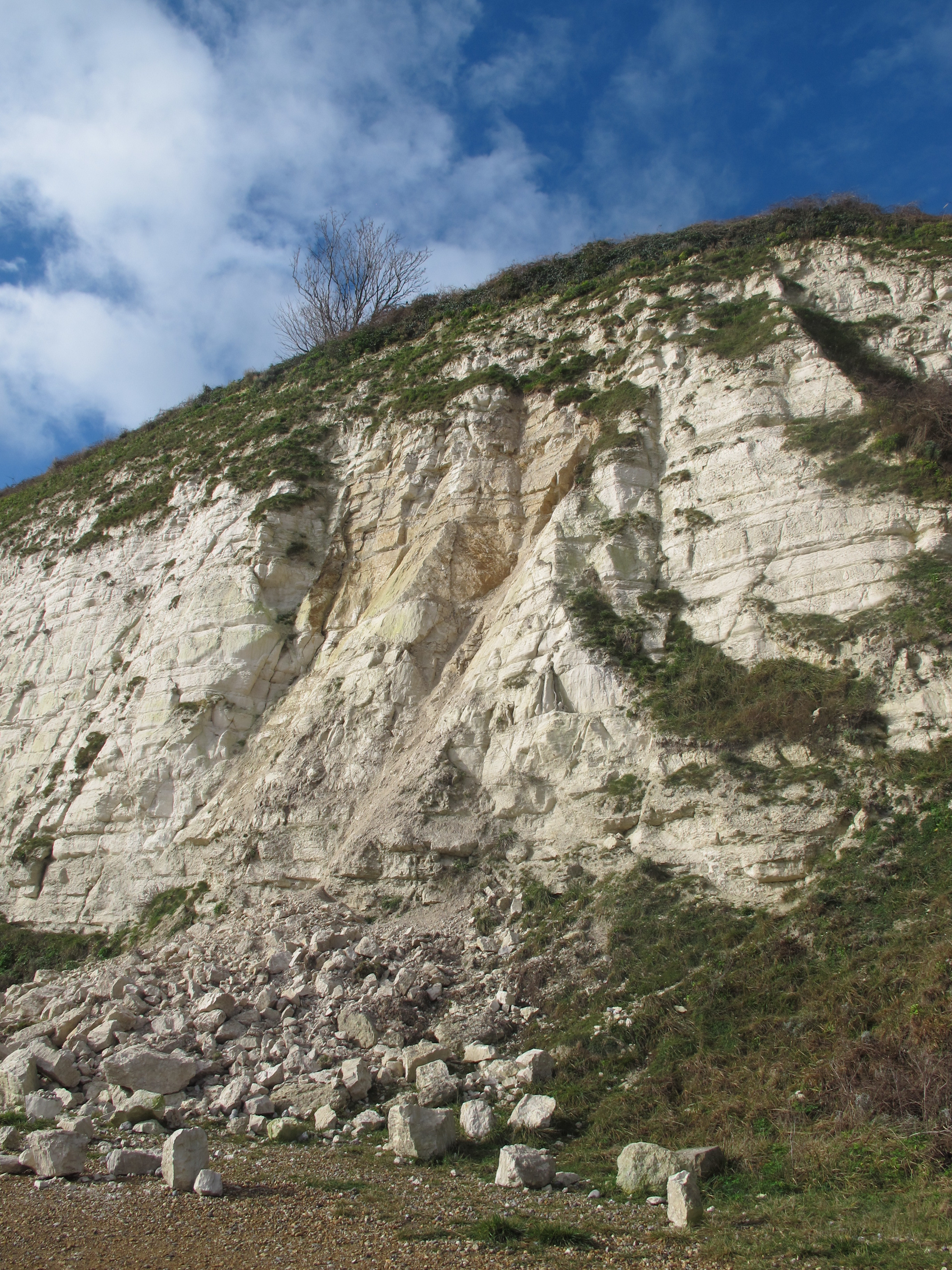
Example of corrosion; if this would go on, the chalk rocks need to be replaced by dikes (eventually).
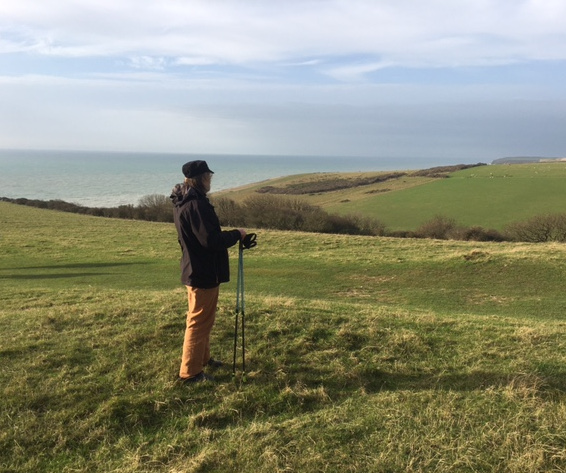
Early (very) 2022
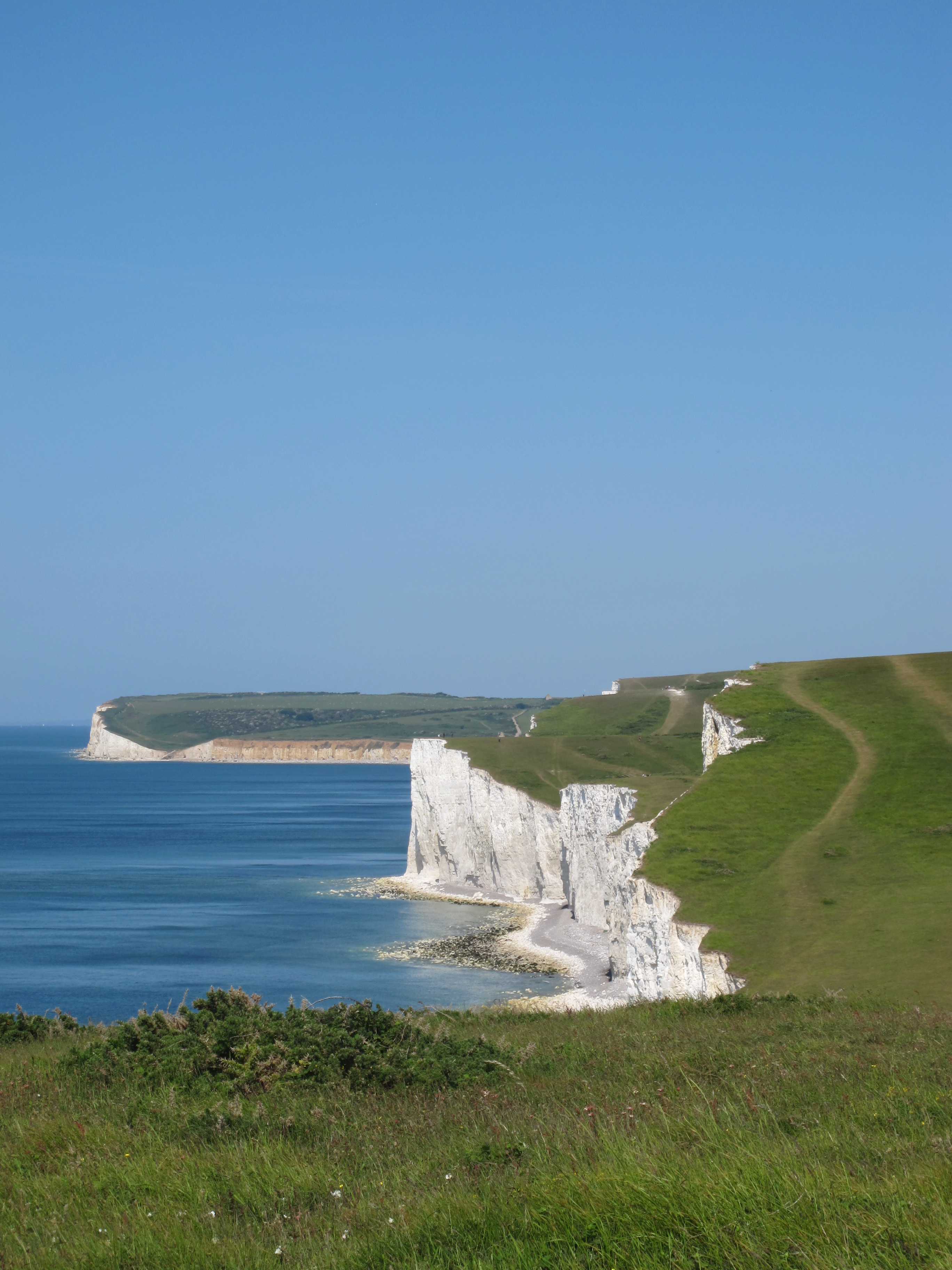
Seven Sisters
Of course, you could also walk the Sisters from the other end. But when we went to walk along the bendy path with the Cuckmere River,
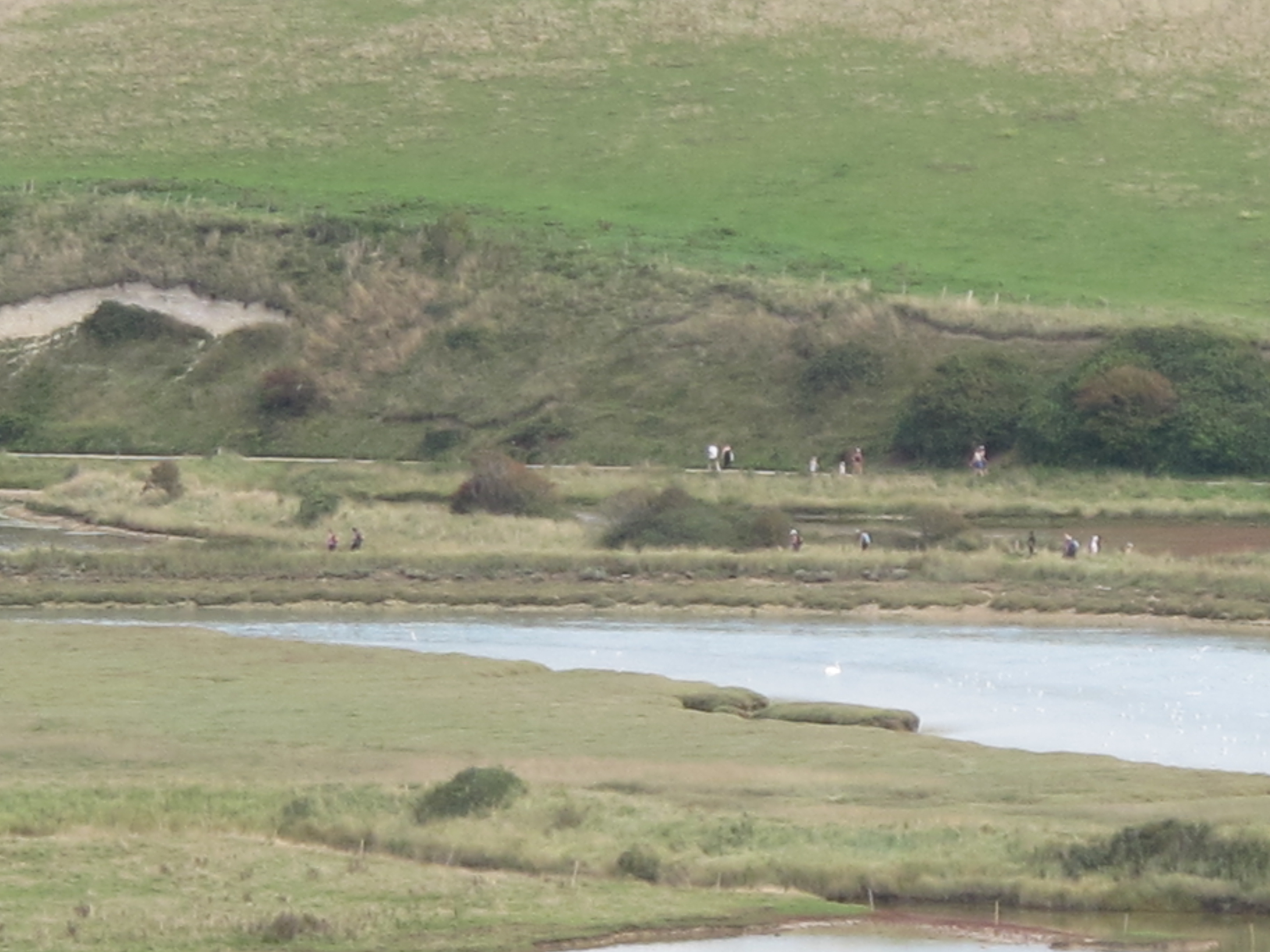
somehow we always ended up on a gravel beach and never went up the Sisters (it may have to do with my fear of height). And if we went a bit further, to Seaford, we ended up at the Cottages.
An alternative to the Sisters was to walk the South Downs way: up from Firle.
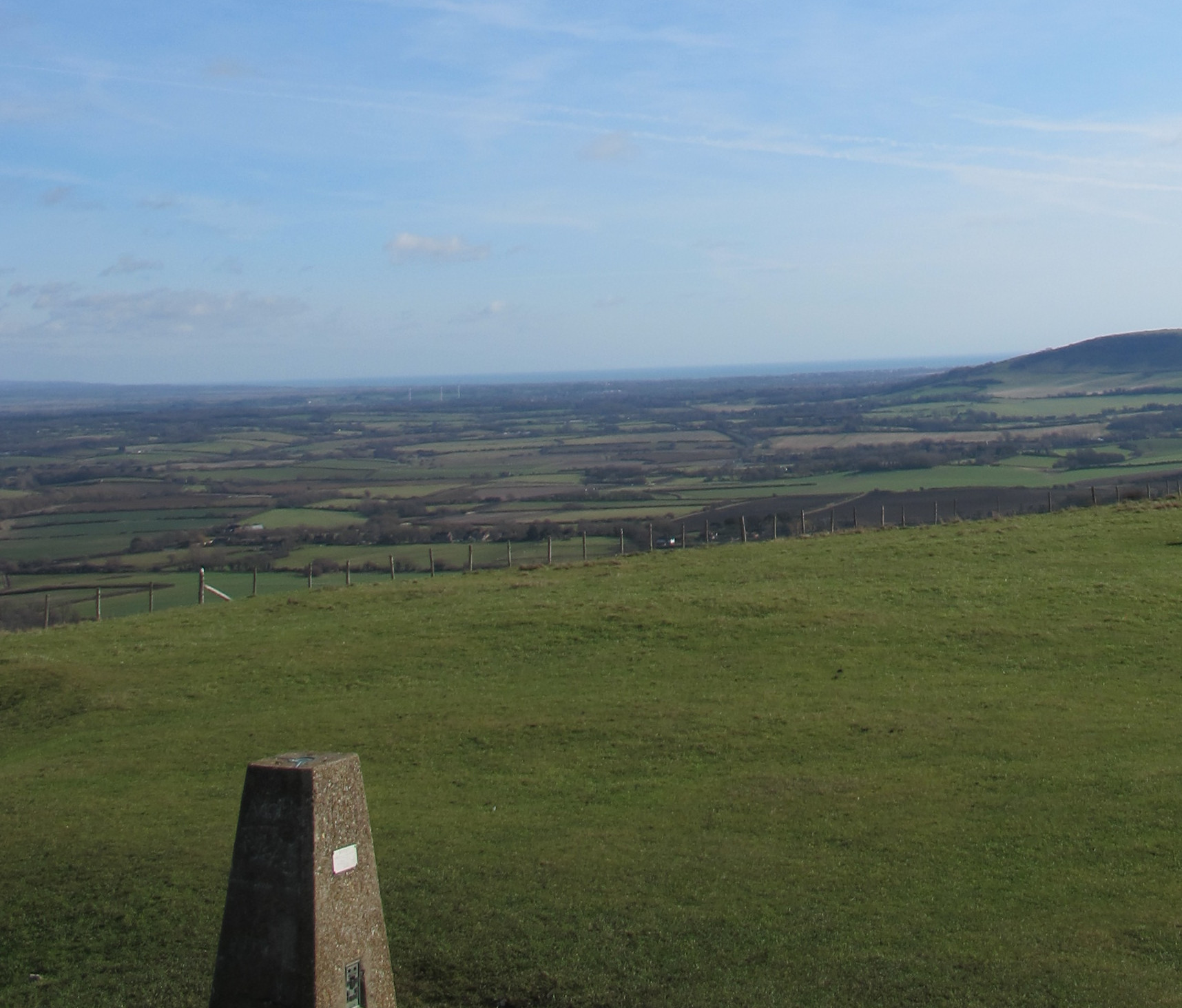
We regularly did that, too and then had something to eat at the Ram Inn.
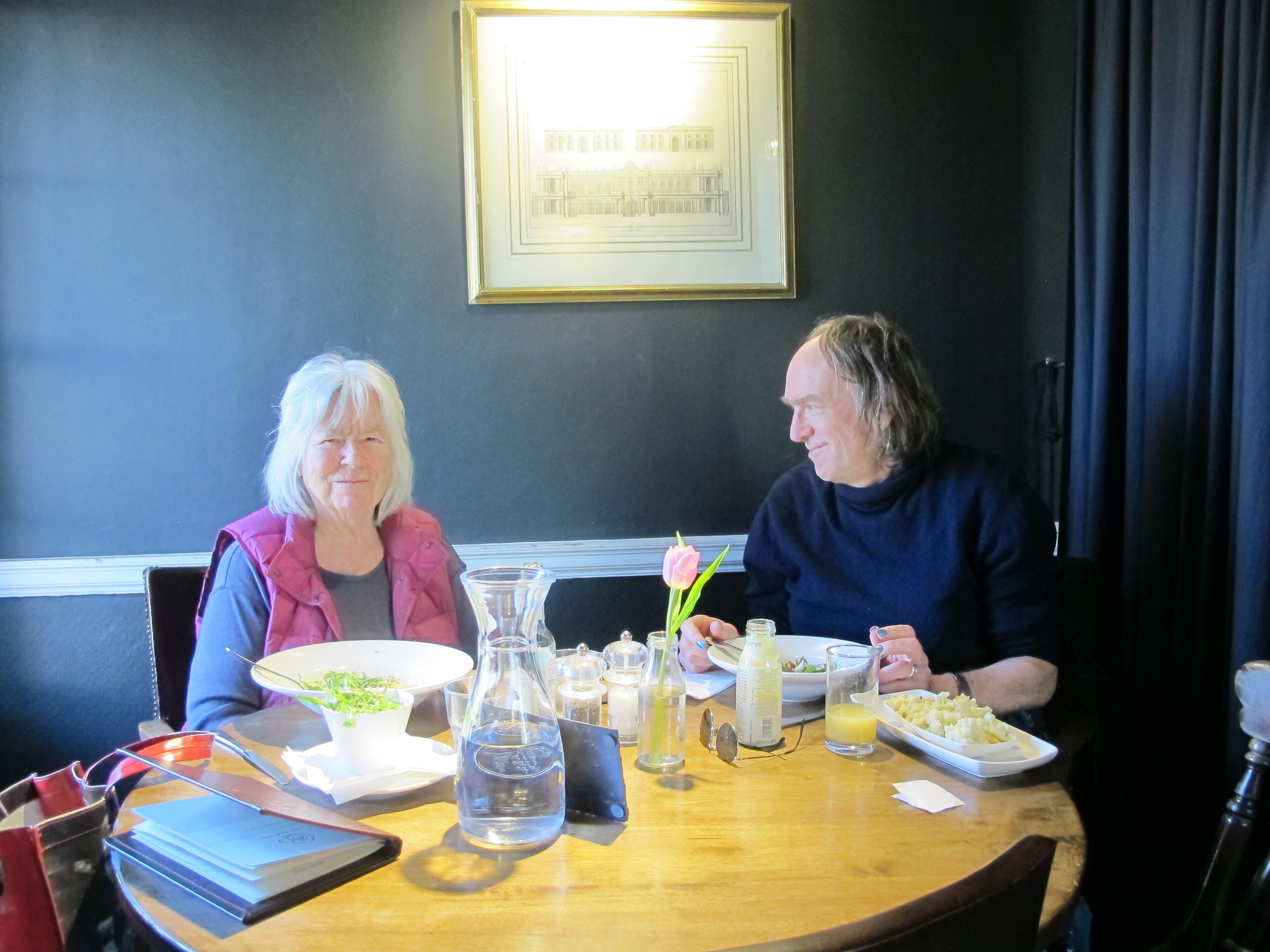
Our very last meal at the Ram Inn
At the beginning of the new century, I decided not to search for jobs anymore. I had plenty to do without these quests (and we could live in Sicklehatch): among the things I was going to do, was writing my big witchcraft book, The Cat and the Cauldron (which, as of today, still is not completely finished).
Together with Owen and Jonathan (the last one I had met in Exeter and then in Woudschoten, where I also “met” C.), we formed the editorial trio of the Magic & Witchcraft series. This was a kind (of substitution) of a position.
Most of my current interests [see the rest of this site] were developped in Sicklehatch.
THE END
Then, everything was over and done (and out) – I’m slightly summarizing and skipping details here; I packed the books and other stuff in my den and left Sicklehatch for good.
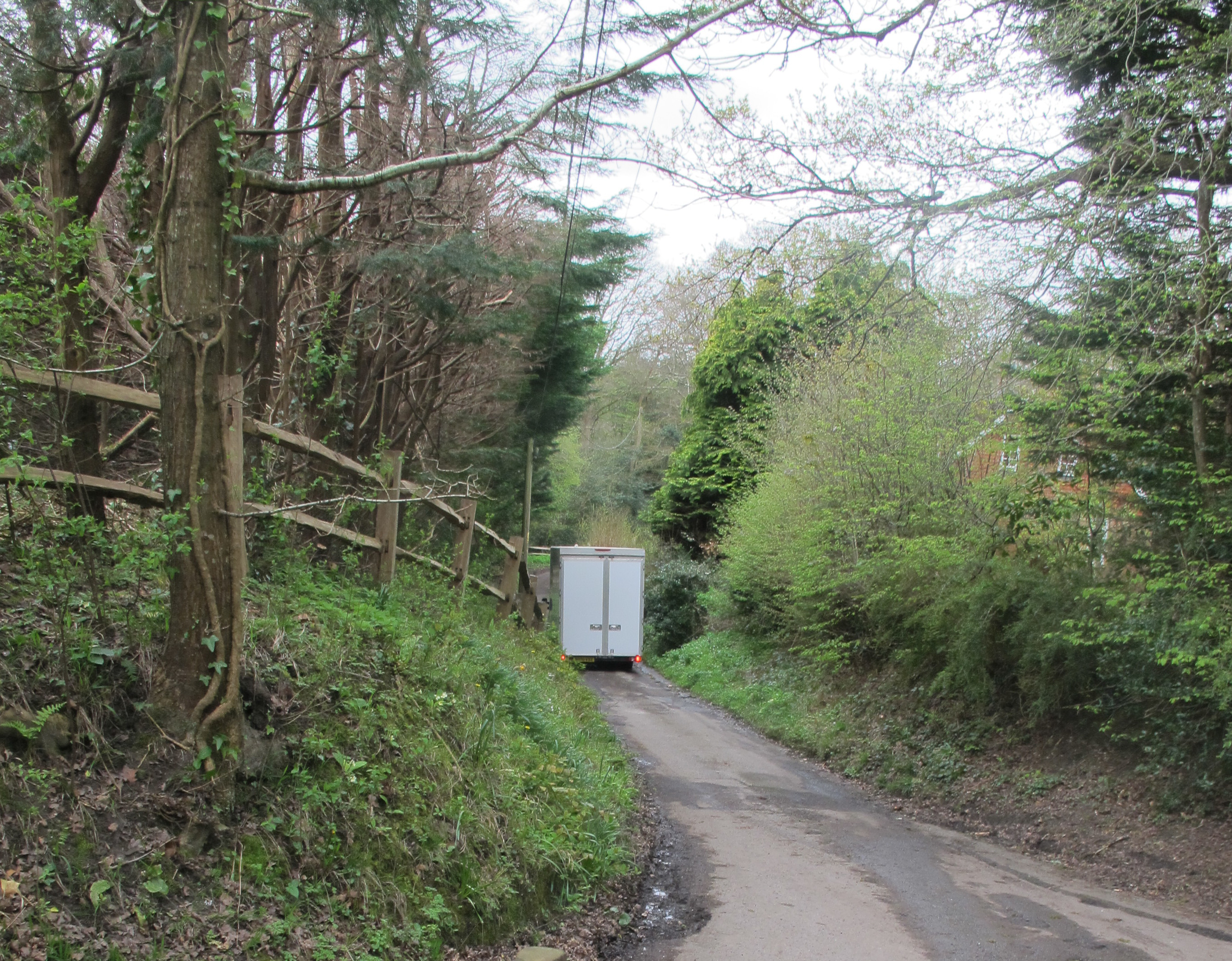
Removal van leaving
A bit later, Neelchen sold Sicklehatch: returning to the Sicklehatch I loved and knew, is impossible.